Elections
Republicans are quietly trying to disenfranchise millions of voters (3/31/2025)
Proof Trump RIGGED the Election Using Voter Suppression Tactics! w/ Greg Palast (Youtube)
The Coming Attack on Free and Fair Elections (2/4/2025)
Restricting the Freedom to Vote
The SAVE Act would be one of the worst voting laws in congressional history.
(1/31/2025)
Trump Lost. Vote Suppression Won. (1/24/2025)
Fifteen Years Later, Citizens United Defined the 2024 Election
The influence of wealthy donors and dark money was unprecedented. Much of it would have been illegal before the Supreme Court swept away long-established campaign finance rules.
(1/14/2025)
Factchecking the most pervasive myths and lies about US elections (10/30/2024)
The War on the Vote
Two men have re-engineered the US electoral system in favor of Republicans David Daley (10/4/2024)
The Continuing War on Easier Access to Voting (9/17/2024)
Endgame: The Risk of a Trump Coup and How to Prevent It (9/17/2024)
There's a danger that the US supreme court, not voters, picks the next president (9/17/2024)
Election certification under threat (08/12/2024) - Download Report
'A different level than 2020': Trump's plan to steal election is taking shape (8/12/2024)
An Election in Danger? The Fragile State of American Democracy (6/28/2024)
'Start the Steal': Trump Once Again Planning to Overturn an Election (4/2/2024)
Potential 2024 'Chaos': Election Deniers Refusing to Certify Results (3/17/2024)
Trump allies are quietly purging names from voter rolls in battleground states: report (3/4/2024)
I don't care who does the electing, as long as I get to do the nominating. Boss Tweed
I consider it completely unimportant who in the party will vote, or how; but what is extraordinarily important is this - who will count the votes, and how. Joseph Stalin 1879-1953 Soviet dictator
In the United States, our findings indicate, the majority does not rule -- at least not in the causal sense of actually determining policy outcomes. When a majority of citizens disagrees with economic elites and/or with organized interests, they generally lose. Moreover, because of the strong status quo bias built into the U.S. political system, even when fairly large majorities of Americans favor policy change, they generally do not get it. Gilens and Page
ANYONE WHO DOUBTS A #RIGGED ELECTION- 🚨🚨A must watch🚨🚨 😲
— Deep-F®️ied Peace 🎵🎬🌞🐾 (@Kerrybear100) November 7, 2024
He also said a few days ago: "I'm so far ahead, but I'm not supposed to tell you that." ⚠️👀 pic.twitter.com/rs7Sh44yFL
Republicans want to make it harder for you to vote and easier for them to cheat. Look at what you are seeing now in Georgia. For four year they have embraced the big lie and election denialism. They are trying to put election deniers in key positions. Our job is to stop them. pic.twitter.com/MsGmcC4lCA
— Marc E. Elias (@marceelias) August 30, 2024
"Nothing is more dangerous to our democracy than a movement based on election lies promoted by radical law enforcement officials who falsely believe they are the ultimate authority, including on matters of election administration." 'Danger to our democracy': fears over Trump allies' summit with far-right sheriffs (4/17/2024)
As the 2024 election approaches, state legislatures continue to propose and enact laws that expose our election system to partisan disruption and manipulation. These laws ultimately increase the risk of subversion-that is, a declared outcome that does not reflect the true choice of the voters. They also abandon long-standing principles of nonpartisan election administration and instead allow for - or even encourage - dysfunction, misinformation, confusion, or manipulation by partisan actors.
A Democracy Crisis In The Making: December 2023 Year-End Update
Election officials have become prime targets of those purveying the Big Lie that the 2020 presidential race was "stolen." A new Brennan Center poll of local election officials shows how damaging these sustained attacks have been. Among the dire results: 77 percent feel that threats against local election officials are increasing, and 30 percent know of one or more who have quit at least in part due to safety concerns. They also fear that conspiracy theories will infect impartial election administration. All levels of government must act now to protect our elections and the people who run them. Brennan Center (3/10/2022)
In early February, a Brennan Center for Justice report detailed: "Thus far this year, thirty-three states have introduced, prefiled, or carried over 165 bills to restrict voting access. These proposals primarily seek to: (1) limit mail voting access; (2) impose stricter voter ID requirements; (3) slash voter registration opportunities; and (4) enable more aggressive voter roll purges. These bills are an unmistakable response to the unfounded and dangerous lies about fraud that followed the 2020 election." On Feb. 24, the center updated its account to reveal that "as of February 19, 2021, state lawmakers have carried over, prefiled, or introduced 253 bills with provisions that restrict voting access in 43 states."
Voter Suppression Is Grand Larceny
I warned about this 9 months ago speaking with @JoyAnnReid @MSNBC. "The endgame of election denial is not about claiming that this or that election was corrupt. The endgame is that we shouldn't have elections." At 10:00 in the clip:https://t.co/juXd5qHyqF https://t.co/MrOt1nA2we
— Ruth Ben-Ghiat (@ruthbenghiat) July 27, 2024
It's time to abolish the Electoral College
Disparity Between White and Nonwhite Voter Turnout Reaches New High (3/7/2024)
How to steal a US election: Harvard's Lawrence Lessig on Trump's new threat (2/11/2024)
Intimidation of State and Local Officeholders (1/25/2024)
Silvio Berlusconi may be gone, but Trump's still here. The rotten populist legacy is everywhere (6/12/2023)
States Are Silencing the Will of Millions of Voters (6/3/2023) NYT
G.O.P. States Abandon Bipartisan Voting Integrity Group, Yielding to Conspiracy Theories (3/7/2023)
Voting rights in 2023: what are the key issues for US democracy? (1/6/2023) Guardian
Moore v. Harper, Explained
The not-surprising, very bad defeat of Biden's attempt to protect voting (1/20/2022)
- If you can keep it
- Ranked Choice Voting (IRV)
- Citizens United
- Russia
- Money
- Vast Right Wing Conspiracy
- Election 2024
- Election 2020
- Election 2016
- Election 2014
- Election 2010
- Election 2008
- DemocracyDocket
- Voting Machines
- Vote Suppression
- US Democracy Center
- National Popular Vote
- Brennan Center
- National Voter Corps
- Fair Vote
- EFF
- Voter Guides
- voteirv.org Instant Runoff Voting a prerequisite to break the two party monopoly of US elections.
- Voting: The Case for Low-Tech
- Computers That Count Votes
- Condorcet method
- Center For Tech and Civic Life
- Black Box Voting
- Run For Something
- League of Women Voters
- Senate Judiciary Report: Subverting Justice
- Democratic Redistricting
- Republican Election Rigging
- Vote.org
- NCSL
- Greg Palast
- Election Integrity News
- Defence of the National Popular Vote
- Wesleyan Media Project
- Fair Vote
- Third Parties Don't Work: Why and How Egalitarians Should Transform the Democratic Party
- Election Law Blog
- Unrig The Map
- Get Money Out
- Voter Rights Action
- USVRA
- The Carter Center
- Open Debates
- Andrew Krieg
- Superpacs
- Election Protection Action
- Election Reform Resources
- Richard Charnin
- Unequal Access
- Issue One
- Civil Politics
- My Fair Election
- Elections Not Auctions
- Election Defence Alliance
- Fair Elections Now
- Campaign Legal Center
- Public Campaign
- Protecting the Vote.org
- Americans-Elect.org
- No More Stolen Elections
- Swing State Project
- Verified Voting Blog
- Voters For Peace
- Elections At Risk
- CTVotersCount
- League of Women Voters SE Connecticut
- Common Cause
- Public Campaign
- BISC
- Swing State Project
- Project Vote Count
- Video the Vote
- Elections At Risk
- Open Voting Consortium
- Steal Back Your Vote
- ElectionLine.org
- FEC Info
- CSES
- Ct Citizens for Ballot Initiative
- Price of My Vote
- American Blackout (a movie you should see.)
- Election Protection Wiki
- Raleigh Myers election talking points
- Campaign Money
- Campaign Finance Information Center
- CT Citizens Election Program
- Campaign Underground Tips and Tricks
- See these Election Reform Reports.
- EPIC notes on voting
- Politics of Voter Fraud
- Competitive Democracy
- Project Vote Smart
- Why Election Fraud is NOT in your newspaper
- Where's the Paper.org
- ElectionLine.org
- Verified Voting
- Election Protection
- Vote Trust USA;
- Voters UNite;
- Velvet Revolution
- Demos
[COMMENTARY] We Told You So: The MAGA Plot to Dismantle the American Voting System From Within https://t.co/q9cH8Oivr8— HillReporter.com (@HillReporter) June 1, 2022
We don't spend enough time talking about how profoundly craven the Republican's attack on voting is https://t.co/D2MnTb4shN— Molly Jong-Fast (@MollyJongFast) May 8, 2021
We cannot allow billionaires to determine the outcome of our elections.
— Bernie Sanders (@SenSanders) November 17, 2024
Citizens United has got to go.
It's time for public funding of elections. pic.twitter.com/M0KwO1YsHX
The Republican plan for 2024 is to make it harder for you to vote and easier for them to cheat.
— Marc E. Elias (@marceelias) August 23, 2024
Paige and I explain their strategy and how we can fight back and win! https://t.co/ZzghCZOSOa
republicans are going to try to steal our next election.
— Richard E Russell #IStandWithUkraine (@Elwood_R) February 24, 2024
They'll refuse to certify Biden electoral votes from certain states and get the election thrown to the House where they represent more states and will vote for trump.
They have not and will not stop their insurrection.
The Trump campaign tried to organize & submit phony slates of electors to try & steal the last election. That's what voter fraud looks like! pic.twitter.com/EfhZwAyz0L
— Rep. Jim McGovern (@RepMcGovern) July 10, 2024
US elections do not meet
international standards and have been getting worse. Our two party
system and the rest of our established institutions are all
anti-democratic. Expensive campaign financing is mostly for media: an example of media extortion.
Even the simplest reforms, like the ones we need for
trustworthy elections , are not up for discussion. Major issues are not discussed much. Dialog is confrontational.
Election denial is a direct assault on democracy by a right wing, minority Party, the GOP, assisted by the Supreme Court.
The Supreme Court demolished the Voting Rights Act, so Republican States again suppressed voters mostly along racial lines, gerrymandered to disenfranchise minorities. SCOTUS decisions on campaign finance and Citizens United allowed big, dark money into elections, and they loosened laws on corruption. SCOTUS equated money with speech, but the difference is money corrupts.
The Electoral College elects the President by States, not by the people. The Supreme Court will hear a case that could allow State legislators to over ride voters. This could be fixed by the National Popular Vote, which would assure the President would be elected by the popular vote.
Russia helped Trump's election and benefited magnificently from his Presidency. Not only does Trump admire Putin, it appears he intended to use the authoritarian's playbook to become dictator for life.
Trump tried mightily to overturn the 2020 election, changed high level Defence and DOJ officials to place loyalists in positions to overthrow the government. He was recorded threatening Georgia election official to get more votes. He made up and broadcast the big lie that he won the election. Seven GOP States put up their own slate of electors, forged documents to make Trump the election winner so they could inform VP Mike Pence that the real electors were the GOP. On January 6 Pence could throw the election to Trump, the insurrection was a part of the plan. On 1/6 there was an actual insurrection. Court cases challenging election results in many States were thrown out, some of his lawyers were sanctioned for their part. Expensive recounts changed no election counts. His agents intimidated and threatened poll workers. The coup continues with efforts to replace election workers with Trump loyalists. New voting laws in Republican States will have the effect of suppressing the vote. Florida has formed a special police force for the polls.
The insurrection continues with replacement of regular poll workers with partisans. Many recounts and the CyberNinjas long Arizona effort changed nothing.
Trump's big lie should be seen as information warfare intended to sow doubt about elections. Three generals wrote that the military too is polarized and may support Trump next time. That way Trump's dream of becoming dictator for life could come true.
New laws in GOP States allow legislatures to over-ride the actual vote. Voters don't matter to the GOP, an unpopular minority.
The threat continues as Republicans oppose efforts to allow real elections. This may be the end of US democracy and the republic. It's no accident that CPAC is meeting in Hungary or that Fox News broadcasts its propaganda.
Here's what Canadians are preparing for: "The American polity is cracked, and might collapse. Canada must prepare" (1/2/2022)
Rachel #Maddow nails Trump's election denial motives, "Why would you try to get everybody in your party to say that election results don't count? It's so that the idea that elections don't count becomes the operating principle of the Republican Party." pic.twitter.com/Kz3OntcWWG
— Sarah Reese Jones (@PoliticusSarah) November 1, 2022
BREAKING: Trump attorney Cleta Mitchell caught on tape outlining her plan to suppress Gen Z voters, stop early voting, limit votes from overseas, and other anti-democratic schemes.
— Scott Dworkin (@funder) April 21, 2023
An anti-American plan targeting critical battleground states for the next presidential election.
Representative government is in crisis today, partly because it has lost, in the course of time, all institutions that permitted the citizens' actual participation, and partly because it is now gravely affected by the disease from which the party system suffers: bureaucratization and the two parties' tendency to represent nobody except the party machines. Hannah Arendt (1970)
"The dismal theorem of political science --- that all the skills leading to the rise to power tend to unfit people to exercise it. While there are some exceptions to this principle, there are a deplorable number of good examples. A person rises to power by pushing the other contenders down, in some cases by murder, frequently by deceit, and even in democratic societies by being more persuasive that the competitors. Persuasiveness is not always related to the capacity to live up to the persuasion." Kenneth E. Boulding, The World as a Total System p116.
Republicans are planning to subvert future elections. They tried to overturn the election results in court in 2020 and overthrow them at the Capitol on Jan. 6, 2021. Republicans will try again in 2022. If they fail, they will try again in 2024.https://t.co/TW2VDSoKBg
— Marc E. Elias (@marceelias) June 20, 2022
70 Percent of Republicans Running for Congress Doubt 2020 Election Result (10/14/2022)
Next Time Trump Tries to Steal an Election, He Won't Need a Mob (7/8/2022)
61 Forms of Voter Suppression
The 'big lie' advocates threatening free and fair elections across the US (5/24/2022) Guardian
Nearly a year and a half later, surprisingly few understand what January 6 was all about. (4/27/2022)
The Biggest Risk to This Election Is Not Russia. It's Us. (10/7/2020)
Be very worried that the next election(s) may be a sham.
PSA: There are 207 current elected officials who helped Trump in his effort to overturn the 2020 election. Democracy is not safe.
— Robert Reich (@RBReich) June 6, 2022
If you think you're witnessing any voter suppression, please visit https://t.co/44G0U53M0U to report it to our team of voting rights attorneys who are on standby to help and use this information to inform litigation. pic.twitter.com/T9etDXZolm
— Legal Defense Fund (@NAACP_LDF) November 8, 2022
'Taking the Voters Out of the Equation': How the Parties Are Killing Competition (2/6/2022) NYT
Census Memo Cites 'Unprecedented' Meddling by Trump Administration (1/15/2022)
America is facing a ballot-box coup - help us sound the alarm in 2022 (12/29/2021)
The Election Sabotage Scheme and How Congress Can Stop It (11/8/2021)
Two election workers break silence after enduring Trump backers' threats (12/10/2021) Reuters
Republicans are 'cracking and packing' voters to secure minority rule, David Daley (11/17/2021) Guardian
Reuters unmasks Trump supporters who terrified U.S. election officials (11/9/2021)
Trump Asked DOJ Nine Times to Overturn Election, Says 'Damning' Senate Report (10/7/2021)
Special Report: Backers of Trump's false fraud claims seek to control next elections (9/22/2021)
Trump-inspired death threats are terrorizing election workers
There have been 8,000 threats against members of Congress since January 6th, election workers across the country are leaving their positions out of fear for their safety, there are over 400 bills introduced in states to stop the freedom to vote. The stakes have never been higher.
— Amy Klobuchar (@amyklobuchar) December 18, 2021
American Airlines, other companies resume donations to Republicans who objected to election results (7/15/2021)
They tried to overturn the 2020 election. Now they want to run the next one. (5/24/2021)
The For the People Act: Separating Fact from Fiction (5/13/2021)
How Republicans Could Steal the 2024 Election (5/13/2021)
Phone the United States Capitol switchboard at (202) 224-3121. A switchboard operator will connect you directly with the Senate office you request.
— #MovingAmericaForward (@KoaCalifornia) September 26, 2021
Ask your Senators to: Defend Democracy &
your Right to VOTE by supporting For the People Act & Restore the Voting Rights Act
Is Voter Fraud a Danger or a Myth? (10/19/2020)
0/20 This election will determine the future of our republic. Here are some principles for the preservation of freedom that I wrote nearly four years ago, when all of this was beginning. I share them again now in admiration of Americans who protest for justice and work for truth.
— Timothy Snyder (@TimothyDSnyder) October 31, 2020
Arizona GOP-Led Election Audit by Cyber Ninjas Probed by Judge (4/23/2021)
A Leap Forward for Democracy Is Within Our Grasp (3/17/2021)
Trump to Georgia: "I just need 11,780 votes."
— Sina Nemazi (@SinaNemazi13) July 30, 2021
Trump to the DOJ: "Just say that the election was corrupt and leave the rest to me..."
What more do we need to seek justice?
If It's Not Jim Crow, What Is It? (4/6/2021)
Voting Rights Roundup: GOP passes Georgia's most far-reaching voting restriction law since Jim Crow (3/26/2021)
A healthy democracy would make Election Day a national holiday so more people would vote. A democracy besieged by fascists would face shorter voting hours, fewer voting days, fewer voting methods and even a ban on giving water to people standing in line to vote.
— Mark Jacob (@MarkJacob16) March 9, 2021
For the record, in a well-functioning democracy, the goal is to expand voting not suppress it.
— Steven Beschloss (@StevenBeschloss) March 4, 2021
Voter Suppression Is Grand Larceny (2/28/2021)
In Statehouses, Stolen-Election Myth Fuels a G.O.P. Drive to Rewrite Rules (2/27/2021)
NEW VIDEO: Republicans know their ideas aren't popular, which is why they've lost the popular vote in all but 1 election in the last 32 years. So after losing in 2020, they're trying to make it even harder to vote across the country.
— ReallyAmerican.com (@ReallyAmerican1) March 12, 2021
RT to expose how the #GOPStealsOurVotes pic.twitter.com/MrlEsJNrkl
67 Percent of Americans Support H.R.1 For The People Act (1/22/2021)
Trump's Fraud Claims Died in Court, but the Myth of Stolen Elections Lives On (12/26/2020)
Brand new mail-sorting machine at Grand Junction, Colorado USPS annex thrown in dumpster https://t.co/eHZAhJlXSV
— Jon Cooper (@joncoopertweets) August 25, 2020
Trump's Attempts to Overturn the Election Are Unparalleled in U.S. History (11/19/2020)
Trump may try to steal the election. We need to start preparing for that now (10/20/2020)
Texas shutdown of mail-in ballot drop-off sites hits diverse cities hardest (10/3/2020)
Not satisfied with wrecking the post office, casting doubt on mail-in ballots, suing all over the place to suppress votes, now the Trumpian plan is to intimidate in person voters. So much so that the NAACP is organizing volunteers to escort voters into their polling place.
— Barbara Malmet (@B52Malmet) October 8, 2020
Are Republican Judges Putting Their Thumbs on the Electoral Scale? (9/25/2020)
How the Supreme Court revived Jim Crow voter suppression tactics (9/21/2020)
Trump's Perverse Campaign Strategy (9/15/2020)
The G.O.P. Plot to Sabotage 2021 (9/14/2020)
The Electoral College Will Destroy America (9/8/2020)
Carter Centre to launch first-ever US election initiative, citing 'erosion' of democracy (8/22/2020)
The Office of the Director of National Intelligence's decision to cancel all election security briefings for the Congress is a shocking abdication of its responsibility to keep Congress informed.
— Nancy Pelosi (@SpeakerPelosi) August 29, 2020
I am not at all certain we will be able to conduct a free and fair election in November or have a peaceful transition of presidential power in January. We are edging toward a cultural civil war, only this time we are not lucky: Abraham Lincoln is not the president. Tom Friedman, New York Times (6/4/2020)
An Angolan friend of Joe Wilson remarked: "One candidate loses the popular vote by over 500,000 ballots, but his brother is governor of the one state where the outcome is too close to call. The effort to count the ballots is disrupted by the Washington staffs of elected representatives from the candidate's party, and the court that ultimately adjudicates the outcome is made up largely by people appointed by the candidate's father. Sounds a lot like an election in Africa."; Joe Wilson: Politics of Truth; pg 281.
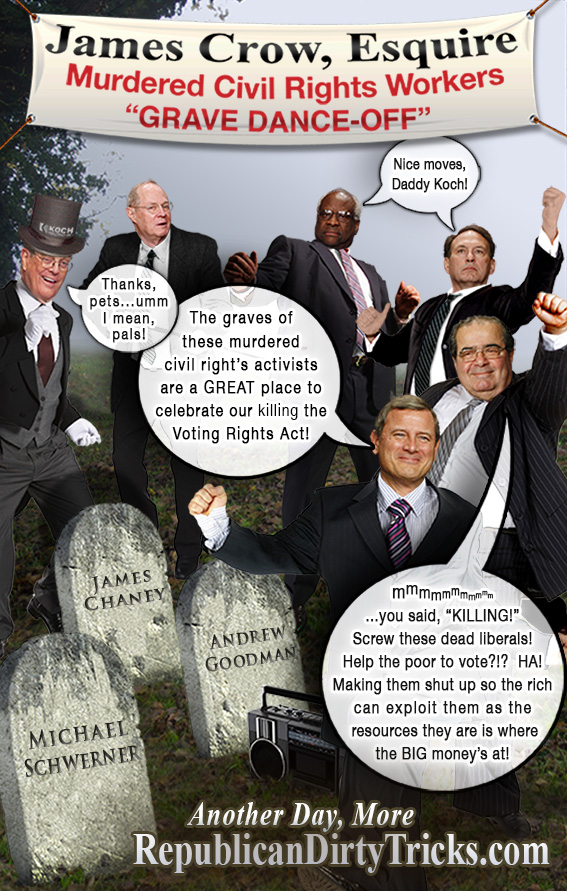
Chief Justice John Roberts Jr 6/25/2013:
— James Aymann (@AymannJames) May 26, 2024
"There is No Denying - That the Conditions that Originally Justified these Measures - No longer Characterize Voting in the Covered Jurisdictions."
Wrong!
States and Counties - with Histories of Racial Discrimination - were Required to ... pic.twitter.com/BlAzMZYRqp
2020 election pushed voter turnout to modern highs. Good, right?
— Brenda (@bkaydw) July 16, 2021
Since 1865 suffrage restrictions targeted Black people, Chinese Americans, European immigrants, women.
Its focus now who gets to count the vote & who gets to vote.#wtpBLUE #DemVoice1 https://t.co/p8Ej76UQHd
Voter suppression the new GOP strategy: Better bring some identification - and not just any identification, official though it may be - if you plan to vote in Republican-controlled states. However, if you contribute tens of millions of dollars to sway an election on Republicans behalf, the party will fight to keep your identity a secret. Voter suppression the new GOP strategy" Harold Meyerson, 11/19/2013
SIX STATES SUE USPS FOR ELECTION INTERFERENCE
— Bombshell DAILY (@BombshellDAILY) August 22, 2020
The slowing or impeding of lawful ballots is a Federal offense.https://t.co/pdrfs6Z9ci
Iran, not noted for its democracy, has its elections on a holiday. If the US did this working people would have a lot easier time voting. What does it say that we have not done this ?
Michigans Postal Workers Say the Fix Is In https://t.co/3RSQgy3Q61 #SmartNews
— A Progressive Human (@HumansAreLoco) August 15, 2020
Trump holds up coronavirus aid to block Democrats' bid for election funding (8/13/2020)
Tips to Mitigate Threats to Our Votes and Voter Registrations Before November (8/6/2020)
Voting in the Year of COVID-19 (7/7/2020)
How Trump Stole 2020 (7/17/2020)
Trump urges Republicans to 'fight very hard' against voting by mail (4/8/2020)
You Shouldn't Have to Risk Your Life to Vote (4/3/2020)
Trump says Republicans would 'never' be elected again if it was easier to vote (3/30/2020)
TRUMP'S 5-PART PLAN TO TO RIG THE ELECTION
— Seth Abramson (@SethAbramson) July 16, 2020
1. Hide COVID-19 data from voters.
2. Make mail-in voting impossible for many voters.
3. Spread disinformation via social media.
4. Solicit and receive illegal foreign aid.
5. If all else fails, provoke a new crisis to distract voters.
“As I have said for many years, I happen not to believe that within the framework of the two-party system, the Democratic Party and Republican Party, that we are going to be able to bring about the real changes in this country that are needed to benefit the vast majority of our people. Essentially, it is my view that the leadership of the Democratic Party and Republican Party are tied to big money interests, and that neither of these parties will ever represent the people in this country who are demanding the real changes that have to take place.” – Bernie Sanders
We now know that a top Justice Department official tried to use the department's power to help overturn the results of the election, without any basis in fact or law and at the clear urging of then-president Donald Trump. This was an attempted coup.https://t.co/cApJB6M8S8
— Noah Bookbinder (@NoahBookbinder) August 6, 2021
If politicians wanted better turnout and fair elections, we would have them. Election Day should be a national holiday. Could be on Veteran's Day to remind everyone what they thought they were fighting for. It is too much to ask people to take time off work especially if lines have been made deliberately long or there are few working voting machines as happened in Georgia.
Behind the scenes, hidden from public view, corporations and big donors actually pick candidates from which voters choose. They oppose democracy and block Constitutional checks and balances, but Congress responds to them, not the people.
We are really only allowed two parties, since added ones would likely be spoilers, yet another way to rig an election for a minority party. It will be that way until we have Ranked Choice Voting. Maine learned that lesson from Governor Paul Lepage. After a referendum and a subsequent Constitutional struggle, they finally got RCV.
The 2 party system is not part of the Constitution and is, itself, part of election problems. A third party is a spoiler, may take votes from the majority party, and sometimes is a sham. Ranked choice voting should be standard to fix it.
The assumption that two parties are the only legitimate competitors is one of the most effective techniques to assure that the status quo will not be challenged. We have dysfunctional government because neither party wants the other to accomplish anything. Better voting techniques, like range voting, would enable multi-party competition. The dialog would improve. Minor parties are, right now, spoilers and can only make prospects for their opponents even brighter.; We do not have a peace party, and continue to support an empire in decline that is bankrupting us.
Since voting in person in a pandemic is a health risk, absentee paper ballots are in order, they are also more efficient. Republicans, including Connecticut Trump followers, resist this even if it puts voters lives at risk.
Wisconsin Republicans, assisted by the Courts, made sure that in-person voting was required disregarding the pandemic. Because poll workers are elderly, there were few of them, resulting in long lines to vote. The 'pro-life' GOP would put lives at risk to vote. SCOTUS, having allowed dark money into elections, turned a blind eye to gerrymandering, has all but obliterated the Voting Rights Act.
Candidates tend to change their positions depending on the
venue. Once elected, may not do what they said they would.
(etch-a-sketch) The best we
can hope for is, when a candidate announces his agenda, he will have the
integrity to act on it. The worst case is increasingly likely: we will get a strong
man head of state who is above the law,
corrupt, and capable of destroying us all. Are we there
yet ?
Qualifications are irrelevant (Bush is an example.) If you were hiring for a high office, you would look for someone who speaks well, has traveled widely, has diplomatic expertise, academic excellence, and a distinguished record. (Bush had none of these. Thanks Republicans.); After reviewing many such resumes, you might find an acceptable candidate. That's not how we do it. Trump and his cabinet prove that vetting is not part of the political process.
Candidates for high office should be screened: background checked, tax returns required, conflicts of interest resolved,
Conventions
accomplish little since the candidate has been selected well in
advance.
The GOP knows a real election would be a disaster for them, so they gerrymander, purge voter rolls, make voters wait for hours in long lines to vote, spend massive cash to buy media, flawed election mechanics, fail to vet or background check candidates. Candidates, to a large extent, are not really selected in primaries. They are funded by wealthy donors well before the primaries for very high stakes donations. That explains why both parties candidates are from almost identical backgrounds, why they are so dedicated to the corporate interest, and also why the US is more a plutocracy than a democracy.; Electing candidates from dynastic families creates massive conflict of interest. (See Bush.) Republicans also put up celebrity candidates with little experience in public office, who most likely can be persuaded to act in the interest of their donors.
US elections are rigged well before the votes are cast in a variety of ways: party insider dealings, loaded media, gerrymandering, suppressed voter registration, large moneyed interests, primaries where special interests can dominate, strange differences in state procedures, plain dirty tricks, misleading attack ads, rigged voting machines, outright miscounting, or even partisan court decisions... and so on.
As we saw in Florida and Ohio, partisan bureaucrats can rig elections wholesale by controlling voter registration lists, dirty tricks, manipulating media, allocation of election machines, hacking machines to fix vote totals, and, as Republicans are doing in many States, making it harder to vote.;
The person who manages to get 'elected' is the one who gets to
set an agenda...whether most of the people
agree with him or not. Some politicians regularly change their positions
depending on who funds them.
Is it coincidence that terror alerts occur just before elections ?
Since use of nuclear weapons are suicidal for humanity, the next war could be with cyber weapons and foreign infiltration such as the one Russians waged to elect Trump. They were surprisingly successful and benefited immensely. It's probably not over. at least until nuclear exchange.
States will soon begin the process of redrawing their electoral districts. And this time, it's on all of us to use our voices and demand that redistricting is fair and transparent so that we have #FairMaps and elections for the next decade. Join us today: https://t.co/a4ObthHF7K
— Eric Holder (@EricHolder) December 29, 2020
Original Problems
The Constitution was written to protect slavery. It gave rural States more powerful votes, so the Senate, the Presidency, and the resulting Supreme Court can be elected without the popular vote which is why they are Republican right now.
The absence of a federal right to vote coupled with the Supreme Court's inclination to value procedure over real-world voter behavior has dramatic consequences for America's elections. Voter-registration requirements are convoluted. Voter rolls are purged chaotically. Ballot design is unregulated and amateurish. Polling hours are haphazard. Voting equipment ranges from high-tech to derelict. Vote-counting and recounting systems are unsystematic. In 1964, the Supreme Court proclaimed that "no right is more precious in a free country than that of having a voice in the election of those who make the laws under which, as good citizens, we must live." But under the decisions of this Court, voters can perhaps be forgiven for feeling occasionally more like mice in a maze than like citizens of a democracy. Victoria Bassetti, from Electoral Dysfunction
Republicans could not repeal the McCain-Feingold campaign finance legislation, or get rid of the Voting Rights Act. But the Roberts Court took care of the problem through constitutional interpretation. Constitutional Rot Reaches the Supreme Court (10/5/2018)
After SCOTUS repealed the Voting Rights Act, Republican States immediately made it difficult for minorities to vote. For 40 years Republicans have been forbidden by the Courts to place intimidating election monitors in polling places, but in November they will be back out there in force.
Must watch. Common sense may be in short supply but it is overflowing in this kitchen. https://t.co/4I1DlPPA6n
— Steve Schmidt (@SteveSchmidtSES) November 4, 2021
Voting Machines
The Only Safe Election Is a Low-Tech Election (2/4/2020)
Hackers Are Coming for the 2020 Election - And We're Not Ready (1/17/2020)
America's Electronic Voting System is Corrupted to the Core (9/7/2019)
Paperless electronic voting machines "cannot be made secure," according to draft recommendations issued by NIST that advises the U.S. Election Assistance Commission.
Voting machines are a risk since software is closed, proprietary and can not be easily audited. They cannot be secured. Simple, scanned paper ballots are far superior and a lot less expensive. Mitch McConnell Received Donations from Voting Machine Lobbyists Before Blocking Election Security Bills
Big Money
The even deeper root of this issue is wealth inequality.
“There is only one issue in this country,” former MSNBC commentator Cenk Uygur told Netroots Nation, in June 2011. “Campaign finance reform.” (From the preface to Lawrence Lessig's book Republic Lost. which is free to download)
The first phase of US elections is an auction
to see which candidates click their heels for the highest bidders. This makes wealthy
campaign donors the gate-keepers. Their interests are sharply different
than most; peoples. See this Lawrence
Lessig Ted talk for a fuller explanation.
BREAKING: New analysis finds that 465 billionaires had pumped $881,000,000 into the 2022 federal midterm elections by October.
— Americans For Tax Fairness (@4TaxFairness) November 3, 2022
That's 27x more than they contributed before Citizens United was decided.
By the time this cycle is over, their donations could climb to $1 billion. pic.twitter.com/8FIUG8WNZ2
Media
"Elections are run by the public relations industry. Its primary task is commercial advertising, which is designed to undermine markets by creating uninformed consumers who will make irrational choices -- the exact opposite of how markets are supposed to work, but certainly familiar to anyone who has watched television." Noam Chomsky, Because We Say So pg 66.
In essence, broadcasters are now profiteering from a vicious circle of corruption: Politicians are beholden to big donors because campaigns are so expensive, and campaigns are so expensive because they're fought through television ads. The more cash that chases limited airtime, the more the ads will cost, and the more politicians must lean on deep-pocketed patrons. In short, the dirtier the system, the better for the bottom line at TV stations and cable systems." Tim Dickenson, Rolling Stone, 8/6/2012
US media
is interested only in the candidates who
raise the most money because, for them, elections are a profit
tsunami. Since a large part of campaigning is spent on
advertising, the broadcasters and other news outlets are strongly
conflicted to favor the fund raising winner. The candidate(s) with
the most dollar votes are the most likely primary winner for the
two major parties. Third parties are, using our election
procedures, spoilers, so it is counter-productive to vote for
them. Range voting would fix this.
Media, covering the election as if it were a horserace, marginalizes candidates who are not raising a lot of money, declare the largest fund-raisers winners, and pretty much force out lesser known candidates (or those who do not agree with the party orthodoxy) with very few votes cast. Since media conglomerates are owned by oligarchs, have been better funded by Republicans, their right-wing bias is obviously to Republicans. The agenda is not for people and the Federal budget proves it. It is corporate. Money sometimes is speech, but in large quantities it can also be exceptionally corrupting. Citizens United needs to be overturned.
U.S. media selects the issues to be addressed in the election discussion. Most often the news is concentrated on the certifiably trivial. It has determined that the fiscal cliff is the problem, not healthcare, education, media concentration, election fraud, income distribution, falling pay scales, loss of benefits, disappearing pensions, empire building, runaway military spending, nuclear proliferation, the prison-industrial complex, torture, renditions, climate change, a partisan Supreme Court, money-driven Congress, or an uncontrolled President that threatens the Constitution.
"Issues, never a strong suit in our politics, are seldom alluded to. Only money - who raised how much and from whom - interested the media, and the politicians." Gore Vidal, Point to Point Navigation.
Election commissions are being kept weak by political leaders who want the freedom to skirt rules without consequences. The two major federal agencies should be in the forefront of fighting for honest elections. Instead, they have little mandate, vigor, or visibility. At the Federal Election Assistance Commission, all five commissioner posts were vacant during the 2012 campaign. The Obama administration failed to overcome Republican obstruction to staffing and funding. A similar situation existed at the Federal Election Commission, where the terms of five of the six commissioners expired by the end of 2012. The commission, which focuses on funding, brought just a tenth of the number of official actions during the year compared to 2008": Presidential Puppetry: Andrew Kreig
Foreign Interference
During the last German election, there was a lot of talk of potential Russian interference, you know, it's gonna swing the election. Well, it turns out there was foreign interference, but it wasn't Russian. It was a combination of the Berlin office of Facebook and a media company in the U.S., which works for Trump, Le Pen, Netanyahu, other nice guys. They used Facebook in Berlin to get a demographic analysis of parts of the population to allow them to microtarget ads to individuals in favor of AfD, the neo-Nazi party, which may have been a factor in their unexpectedly high vote in the election. This was reported in Bloomberg Businessweek. This was a real case of electoral manipulation but somehow it doesn't make the headlines. ( Noam Chomsky)
Seen from the global South, U.S. elections inspire jokes about the deeply flawed democracy that the United States seeks to impose on the rest of the world. When democratically elected governments try to challenge the global capitalist system, they become targets for military intervention, coups d'etat, and furious attempts to destabilize their political and economic systems. So defects of the U.S. electoral system become glaring: scheduling election days on workdays rather than national holidays or Sundays: buying politicians through campaign contributions and other financial support; creation of false consciousness through manipulation of the media; and apathy, non-participation, intimidation, and exclusion of U.S. voters through complex voter registration requirements, insufficient polling places and staffing, and similar maneuvers that discourage voters from voting - leading in this case to Trump's so-called triumph when he received votes from less that 25 percent of eligible voters and less that one-sixth of all citizens, lost the popular vote, and faced no run-off election. Howard Waitzkin
Of the dirty tricks in Presidential elections, probably the worst is interference in foreign affairs to win elections: Nixon sabotaged Vietnam peace talks, Reagan held up release of Iran hostages later sealing the deal with the Iran-Contra scandal, and now it appears that Trump had Russian help in winning his election. In the case of these corporate (Republican) Presidents, we get a large military buildup, partially paid for by cuts to social programs, followed by a war often in their first term. Only sociopaths can qualify.
Reality Winner went to jail for releasing a classified document that confirmed that Russians interfered in the 2016 election. The Trump administration does not acknowledge the problem, Mitch McConnell blocked action to guard against it, so we can be exposed to foreign interference in the future as well.
Evgeny Popov, the host of 60 Minutes, the most popular state TV program in Russia as of 2018, is defiant about the findings in the Mueller report. Popov tells me: 'Soon, we will help you elect Trump once again. Just like the last time. Get ready!' Julia Davis
Platform
We should be voting for a platform that reflects the will of the people, and candidates should be required to implement it. Comparing agendas though, Republicans are, as Thomas Frank wrote so well, not only voting against their own self-interest, their climate denial is a suicide pact for life on the planet. So is the forever war.
Medicare for All is important in a pandemic, a Green New Deal could mitigate the destruction of the planet, international cooperation is necessary for both, free public K-16 public education could improve democracy, productivity and election results, a progressive wealth tax could damp down extreme inequality and pay for the general welfare. It's not easy to see any of these things on the horizon. Republicans claim they're socialist, part of their attack on democracy.
It's not looking good for November. It may be the last chance you'll ever have to vote out Republicans, enablers of a Fascist leader who is attacking and corroding democracy just as other dictators do.
. @marceelias gives us a blueprint for the most important thing we can do
— Clyde224 (@Clyde2241) May 15, 2021
If each one of us could just write 1 tweet a day exposing the Big Lie for what it is, collectively we can make a difference#SaveDemocracy speak truth to lies#OneV1 #DemVoice1 #Dems4USA #FreshVoicesRise https://t.co/R4T4v5Sp11
Freed by Court Ruling, Republicans Step Up Effort to Patrol Voting (5/18/2020)
Voter Fraud Is Part of the G.O.P. Playbook (4/24/2020)
All we're asking is that the voters choose the politicians and not the opposite way around (4/22/2020)
How to Vote By Mail in Every Single State (4/10/2020)
What Happens in November if One Side Doesn't Accept the Election Results? (3/30/2020)
"A few days before the November 2004 election, Jimmy Carter was asked what would happen if, instead of flying to Zambia or Venezuela or East Timor, his widely respected international election-monitoring team was invited to turn its attention to the United States. His answer was stunningly blunt. Not only would the voting system be regarded as a failure, he said, but the shortcomings were so egregious the Carter Center would never agree to monitor an election there in the first place...The American political system wouldn't measure up to any sort of international standards, for several reasons."; From the first page of "Steal this Vote" by Andrew Gumbel (Winner of the Project Censored Award.)
Trump Reveals the Truth About Voter Suppression (4/11/2020)
The Primaries Are Just Dumb (2/26/2020)
Trump: If it's easy to vote, Republicans will never win: "Things they had in [the bill] were crazy," Trump told "Fox & Friends". "They had...levels of voting that if you ever agreed to it you'd never have a Republican elected in this country again."
— essenviews (@essenviews) March 30, 2020
https://t.co/rh8t5CG05X
U.S. "has no functioning democracy": Jimmy Carter (7/18/2013)
Fool Us Once, Shame on You. Fool Us in 2020, Shame on Us. (12/17/2019)
The last election weakened our democracy. Why aren't we preparing for the next one?
The Right-Wing War on American Voters (11/25/2019)
Mitch McConnell received donations from voting machine company lobbyists before blocking election security bills https://t.co/3KfBB7HEpF
— Muckmaker (@RealMuckmaker) September 1, 2019
Florida Republicans, like their counterparts in other states and in Washington, D.C., are becoming increasingly comfortable with the perks of minority rule, like the ability to disregard what the majority of voters demand. They appear to know that when you can't win on your ideas, you win by undermining democracy. Why Are Florida Republicans So Afraid of People Voting? (8/10/2019)
privatization of our elections has occurred without public knowledge or consent, leading to one of the most dangerous and least understood crises in the history of American democracy. We have actually lost the ability to verify election results. How to Rig an Election
There's nothing in the Constitution that says there have to be only two parties. There's nothing in the Constitution about parties at all. There's not even anything in the Constitution mandating that each congressional district have only one member and be represented by one party. We could have a much fairer and better system with the passage of a law. The way to do that is through multimember districts and ranked-choice voting. David Brooks: One Reform to Save America
BREAKING NEWS: Bipartisan Senate panel concludes Russia penetrated all 50 States' election systems and is poised to change vote tallies. But Trump & McConnell still block all defensive measures. Betraying national security and democracy. https://t.co/K6iUcUB1ax
— Laurence Tribe (@tribelaw) July 26, 2019
Republicans, Not Russians, Threaten Our Elections (11/6/2019)
Why Voter Turnout Is So Low in the United States (10/2019)
Why Republicans Play Dirty (9/20/2019)
Fix the Electoral College - Or Scrap It (8/30/2019)
The Election Watchdog That Can't Bark (8/29/2019)
Everyone Seems So Shocked At GOP Non-Response To Election Security Report (7/26/2019)
Russia Targeted Elections Systems in All 50 States, Report Finds (7/25/2019)
We're months away from the start of the next major elections and the Senate hasn't taken up a single bill on election security.
— Kamala Harris (@SenKamalaHarris) November 24, 2019
Dr. Fiona Hill reaffirmed this week that Russians are gearing up to interfere again. What are Republican leaders waiting for? This is absurd.
Two Unofficial US Operatives Reporting To Trump's Lawyer Privately Lobbied A Foreign Government In A Bid To Help The President Win In 2020 (7/22/2019)
DHS, FBI say election systems in all 50 states were targeted in 2016 (4/10/2019)
Republicans freak out over HR1: They don't want America to have fair elections (4//8/2019)
McConnell won't allow vote on election reform bill (3/6/2019)
Trump's DHS Guts Task Forces Protecting Elections From Foreign Meddling (2/13/2019)
Media Can Kick Its Horserace Addiction-And It Must (1/11/2019)
We should really talk more about whether the Electoral College makes sense... https://t.co/p0CuOdq4qK
— David Cicilline (@davidcicilline) July 20, 2019
After Years of Fearmongering Mythical Threat of Voter Fraud, GOP 'Silence Now Deafening' as Real Election Fraud Exposed in North Carolina (12/6/2018)
Election Results 2018
how the gutting of the voting rights act led to hundreds of closed polls (10/16/2018)
C.I.A. Officer-Turned-Candidate Says PAC Obtained Her Security Application (8/28/2018)
Fractured Franchise (7/9/2018)
This Reporter Thinks Russian Hackers Changed Votes for Trump - And His Explanation Doesn't Sound Crazy (7/27/2018)
President Putin, did you want President Trump to win the election and did you direct any of your officials to help him do that? (7/18/2018)
Republicans actions to systematically rig elections
Whistleblower Reality Winner, Charged Under the Espionage Act for Helping to Inform Public of Russian Election Meddling, Pleads Guilty (6/26/2018)
Supreme Court sidesteps major rulings on electoral map manipulation (6/18/2018)
'Democracy for Some, But Not for All': Report Reveals Nearly 1,700 Polling Places Closed Since Supreme Court Weakened Voting Rights Act - https://t.co/oYhXKCTvvR
— Rick Cooley (@rcooley123) September 15, 2019
The Rights Campaign to Expand Voter Purges (6/15/2018)
Russian election meddling meant to help Trump, hurt Clinton, Senate Intelligence Committee finds (5/16/2018)
Bernie Sanders Is the Most Popular Politician in the Country, but the Mainstream Media Is Ignoring Him (3/25/2018)
How Cambridge Analytica used your Facebook data to help elect Trump (3/20/2018)
Extreme Gerrymandering & the 2018 Midterm (3/23/2018)
Knowing Russia intends to hack Midterms, GOP fires key election official battling cyber attacks (2/24/2018)
Who Needs Congressional Districts? (2/20/2018)
Trump Is Undermining the 2020 Census. Marginalized Communities Will Bear the Brunt. (1/5/2018)
Trump didn't actually win the election in 2016. He lost the election, and he was put into office because the Russians interfered.' -Former Pres. Jimmy Carter pic.twitter.com/SBZpaR6JTM
— NowThis (@nowthisnews) July 1, 2019
Former DNI chief Clapper: Intel community cast doubt on the legitimacy of the 2016 election (9/23/2017)
Kris Kobach: Spearheading the Newest Voter Suppression Effort (8/31/2016))
Republicans actions to systematically rig elections (2/21/2016)
Mitch McConnell has blocked:
— Robert Reich (@RBReich) September 27, 2019
--Gun safety legislation
--A SCOTUS nominee
--Clean energy investments
--Voting rights bills
--Anti-corruption laws
--Ethics reform
--$15 Minimum Wage
The obstructionism is staggering. https://t.co/af7DqKPhgi
"Genuine democratic elections cannot be achieved unless a wide range of other human rights and fundamental freedoms can be exercised on an ongoing basis without discrimination based on race, colour, sex, language, religion, political or other opinion, national or social origin, property, birth or other status, including among others disabilities, and without arbitrary and unreasonable restrictions. They, like other human rights and democracy more broadly, cannot be achieved without the protections of the rule of law. These precepts are recognized by human rights and other international instruments and by the documents of numerous intergovernmental organizations. Achieving genuine democratic elections therefore has become a matter of concern for international organizations, just as it is the concern of national institutions, political competitors, citizens and their civic organizations" DECLARATION OF PRINCIPLES FOR INTERNATIONAL ELECTION OBSERVATION. The Carter Center
When Eisenhower warned of the Military Industrial Complex, he was thinking about physical weapons. But, just as unregulated semi-automatics invented for soldiers end up going off in American schools, it shouldn't be any kind of surprise that the weapons of information war are going off in Anglo-American votes. Cambridge Analytica is what happens when you privatise military propaganda: Adam Ramsay (3/28/2018)
James Clapper just said on CNN that he believes the Russians have the ability, if they so choose, to actually manually change votes in the voting machines in 2020.
- (@aravosis) July 26, 2019
This is the second time Ive heard this said this week.
Russian interference in the 2016 United States elections
Trump Still Hasn't Gotten Around to Appointing Someone to Protect Our Elections From Cyberattacks (10/3/2017)
America Held Hostage (9/28/2017)
Tyranny of the Minority (9/25/2017)
The voting commission is a fraud itself. Shut it down. (9/13/2017)
DEFCON attendees hack US voting machines in minutes, exploit multiple vulnerabilities (7/29/2017)
DHS Never Ran Audit to See if Votes Were Hacked (6/20/2017)
Reality Winner allegedly leaked a document proving Russian meddling in the election (6/6/2017)
Top-Secret NSA Report Details Russian Hacking Effort Days Before 2016 Election (6/5/2017)
Trump to Appoint Notorious Vote Suppressor Kobach to 'Sham' Election Commission (5/11/2017)
Russia's Interference in the U.S. Election Was Just the Beginning (4/20/2017)
The Electoral College's Racist Origins
— Sveta for Democracy (@SlavicLady88) November 17, 2019
"But delegates from the slaveholding South had another rationale for opposing the direct election method, and they had no qualms about articulating it: Doing so would be to their disadvantage." https://t.co/o4phkmvZao
"...election fraud has been a common component of our nation's electoral history, and, in the aggregate, undermines the only check that the people have over their leaders." from Deliver the Vote by Tracy Campbell
When you exclude third parties from the election process, third parties that the vast majority of Americans would like to see in the presidential debates, your not only denying those people the right to choose who they want to run for president and who they want to vote for, but youre denying the very fundamental and critical issues that, in a generative democracy, we need to have aired in from of tens of millions of voters.George Farah
The immediate effect of the money-and-media election complex is to encourage election campaigns, like those in 2012, that do not even begin to address the societal pathologies afflicting the people of the United States. The trillion dollars spent annually on militarism and war is off-limits to public review and debate. Likewise, the corporate control of the economy and the corporate domination of government itself get barely a nod. Stagnation, gaping economic inequality, growing poverty, and collapsing infrastructure and social services—major issues all—are accorded nothing more than the market-tested drivel candidates say to get votes. The existential threats posed by climate change and nuclear weaponry are virtually off-limits as campaign-season issues; whole debates that are supposed to go to the heart of domestic and global concerns pass by without mention of them. The drug war, which has created a prison-industrial complex so vast that the United States has a greater percentage of its population imprisoned than any other nation in history, is not to be mentioned—except when obviously engaged and concerned citizens force the issue onto the ballot via the initiative process." Dollarocracy: John Nichols and Robert W McChesney
we're incredibly close to replacing the Electoral College with the popular vote (5/7/2017)
The Federal Voting Agency Republicans Want to Kill (2/13/2017)
Here are nine investigations on voter fraud that found virtually nothing (1/25/2017)
Democracy, Defenestrated (1/7/2017)
The CIA's Absence of Conviction (12/11/2016)
Jill
Stein Pulls Back the Curtain on America’s Voting Chaos (12/15/2016)
The
No-BS Inside Guide to the Presidential Recount (12/1/2016)
How
the GOP Flipped and Stripped Yet Another American Election
(11/20/2016)
DNC
Hacker Dumps Trove of Clinton Documents (6/21/2016)
America's
Voting System is Broken. It's Time to Overhaul It (6/8/2016)
Half
of Americans think presidential nominating system 'rigged' - poll
(3/27/2016)
Land
Of The Free? Harvard Study Ranks America Worst In West For Fair
Elections (4/21/2016)
Meet
the GOP Mega-Donors of the 2016 Election (3/11/2016)
DNC Lawsuit: Three Overlooked Facts Bernie Supporters Need to Know(3/2016)
Republicans actions to systematically rig elections (2/21/2016)
The
Volcanic Core Fueling the 2016 Election (1/25/2016)
Martin
O'Malley: DNC Debate Schedule Is Rigged (8/30/2015)
F.E.C. Can’t Curb 2016 Election Abuse, Commission Chief Says (5/2/2015)
Republicans have made the FEC irrelevant.Even the 2016 Presidential candidates agreed that elections are rigged. But the problem is not voter fraud, it is structural: A partisan Supreme Court, Citizens United, Electoral College, gerrymandering, fake news (mostly Republican), voter suppression, Russian interference, dirty tricks, and other techniques effectively impose minority rule. To put it more bluntly, Republicans cheat at elections. For a variety of reasons favored by Republicans, the U.S. also has the lowest voter turnout of any developed country.
Because Republicans are a minority party they have to cheat at elections. That explains why they tried to bully their way to have a citizenship question on the census. It is why they gerrymander in States where they can. It is why in Florida, where voters said that felons should be allowed to vote, they added a provision that required ex-felons to pay back debt before they could vote. It is why they can maintain control, even of the Presidency without the popular vote. It is why, at every opportunity, they oppose democracy.
Reality Winner went to jail for releasing a classified document that confirmed that Russians interfered in the 2016 election. The Trump administration does not acknowledge the problem, Mitch McConnell has blocked action to guard against it, so we may be exposed to foreign interference in the future as well.
The deep root of our problems is income inequality. See Lawrence
Lessig's youtube video Lesterland for
an idea of how funders influence Congress
and choose candidates well in advance. Billionaires
did win, and so did their agenda.
The two party duopoly , by
gerrymandering, voter suppression, massive cash flow, flawed election
mechanics, bought media, failed to vet or background check Presidential candidates.
Most people didn't like either of the two Presidential candidates for election 2016. Picking the least worst assured that things will get worse, and so it did with Trump.
For all practical purposes, we are not allowed to have minor parties, because they are spoilers. Voting for them can result in the victory of the Party you do not like. The simple solution for this: implement range voting in which you rank the candidates and your second and third choices can count. A Maine ballot initiative passed for this, and should be a model for the nation. Lacking IRV or range voting, just hold your nose and pick the least worst.
Elections are a sham without real discussion of issues and reliable media. Although the Russians were blamed for release of DNC documents, there was no denial that the documents are genuine. What they showed is that the Party selected the candidate, not the people. We do need Wikileaks to know what government is doing.
The two party administration of debates strongly limits the range of discussion. There was not one question about climate change in the 2016 Presidential debates.
The FBI historically has weighed in on
elections and it always leans right. It helped
elect Nixon, Reagan in 1980, and Trump
in 2016. It
has demonstrated the political danger of the surveillance
state.
With election flaws so obvious, several Election reforms should be a priority: range voting so that minor parties are not spoilers, universal voter registration, vet candidates for high office before they get on the ballot including required release of tax returns, and background check appropriate for the position sought, roll back of Citizens United, restoration of the Voting Rights Act, a national holiday for elections, and elimination of he Electoral College so that the popular vote matters. We need fair elections.
Republicans govern for the elite, not the people, and they will game the system even more to extract wealth from the 99.9 %.
The Two Party System
"They've created a system based upon bribery. Today, Wall Street owns our politicians, no matter which party (gang) it is -- their allegiance is to the corporations and big business," Jesse Ventura: Democrips and ReBloodlicans, No More Gangs in Government:
We need to re-examine the two party system. It wasn't part of the Constitution and It is not beneficial. It produces poor candidates, results in gridlock, and government dysfunction. Both major parties are driven by corporate cash.
Since parties run elections, there is considerable corruption that doesn't make the news...let alone the courts. Debates are staged so that real issues are not discussed. See the video "Unprecedented" on-line referenced above (election 2000) for examples.
In the first years of the Bush administration, Republicans controlled all the branches of government (press too really) and Constitutional checks were inoperable. The two-party system short-circuits the Constitution.
Since the Bush administration did not
appoint acceptable candidates for the Federal Election Commission, that too became
dysfunctional.
How to scrap the Two Party System in Three Steps (11/11/2014
Debates
"Who thought this up – Giving a private corporation (CNN) control of a presidential debate? In the most recent Democratic presidential debate, CNN controlled which candidates were invited, who asked what questions, and the location, Las Vegas – the glittering, gambling center of America. This is a mirror image of the control Fox News exercised during their Republican candidates’ circus. Corporatism aside, the debate with Bernie Sanders, Hillary Clinton, Martin O’Malley, Jim Webb and Lincoln Chafee was not a debate. With few exceptions – most notably Hillary Clinton going after Bernie Sanders on gun control, about which she is reborn – the stage was the setting for a series of interview questions to each candidate by Anderson Cooper and his colleagues." Ralph Nader (10/16/2015)
Presidential Debates Should Serve Citizens and Democracy, Not Political Parties
After you see this, if you are not angry about debates, you're not paying attention.
No Debate: How the Republican and Democratic Parties Secretly Control the Presidential Debates George Farah
Reality
Even the candidates agree that U.S. elections are rigged.
When the Supreme Court struck
down the Voting Rights Act,
Republican States immediately went back to
strategies to suppress
voting rights: requiring documentation difficult to get, 'cleansing'
voter registration lists, and others. (See the war on drugs, or prisons,
or national security state, or
vast right-wing
conspiracy.) But Republicans also gerrymandered States so that,
along with a voter suppression effort, they gained long-term control of
the House. They have managed to control the Congress
without a majority of voters.
The Supreme Court's Citizens
United decision guaranteed that the influence of money
in elections will be more powerful than people's votes and, if not reversed, it
will cost us our
republic. Most of the money goes to media
so you won't hear about it from broadcasters.
If it wasn't for Bush, would we have
gone to Iraq ? Would there have been an
initiative to privatize everything including Social Security,
healthcare, utilities, or even the military ?
In a real democracy, our government would support an agenda that is democratically agreed upon. That is NOT the case. That is why torture, renditions, secret detention facilities, secret government, revocation of habeas corpus, empire, war profiteering, are all more important than fixing infrastructure, health care or providing real security for people. No US institutions are democratic. Important issues are not discussed.
If the US was a democracy and was influenced by its people, the US budget would be open and transparent, since most people favor peace, we would not be building an empire, we would not torture, pre-emptive war would be criminal (as it was found at Nuremburg.) and international law would be considered valid. Most people favor health care reform, more equitable income distribution, limits on corporations (like Walmart), US government does not work for the people. Priorities expressed in the US budget are the opposite of those of the people.
The large, secret, unaccountable part of government is
probably the real ruler.
Elections have little effect on policy.
Real democracy would allow people, not oligarchs, to set the agenda, but the likelihood of our seeing any of these things is so slim as to be non-existent.
For election 2016, we are had to choose between two candidates that most people viewed unfavorably. Both would continue in mostly the wrong direction because they are both beholden to big money.
More at Reform.htm
The US election process needs a complete overhaul.;
The two 2016 Presidential candidates both
had mostly unfavorable ratings.
Primary elections are a Rube Goldberg
contraption that make the politically weird State of New Hampshire
one of the most influential. The Manchester Union Leader is one of
the most 'conservative' newspapers in the US. It is instrumental in
keeping the U.S. one of the most reactionary in
the world.
Iowa caucuses appear to be ideal for arranging the outcome. Candidates selected in the primaries are not the best qualified. See Bush for an example.
Candidates, to a large extent, are not
really selected in primaries. They are funded by wealthy donors well
before the primaries for very high
stakes donations. That explains why both parties candidates are
from almost identical backgrounds, why they are so dedicated to the corporate interest, and also why the US is more a plutocracy
than a democracy.;
Electing candidates from dynastic families creates massive conflict of interest. (See Bush.)
Do not underestimate the media's ability to remove candidates from
consideration and to swing elections. Remember how Reagan was
characterized as 'teflon man' because in spite of Iran-Contra
criminal activities, the mining of harbors in Nicaragua (which the
World Court ruled against the US), or the huge waste incurred in
the military buildup to counter the Soviet Union, there was never
any serious press review. Likewise media
was a cheerleader for the war in Iraq and
never looked at it critically. For example, Fox News is, for
all practical purposes, a branch of the Republican party, CNN uses 'conservative' experts, NBC was
owned by war profiteer General Electric, ABC has links to the CIA,
and so on. There is no doubt that US news is seriously compromised,
voters are not given good information, Americans are misinformed, distracted, and misled on important issues.
Concentrated corporate, right-wing; media has dumbed down information to trivialized sound bites. Media has become, with Republican and FCC assistance, more concentrated. This is no accident. Privatized corporate media, has taken almost all meaningful discourse from public policy discussion. Big media only pays attention to candidates with buckets of money (the real election is up to the fund raisers), discussion of issues is limited because only two similar parties debate, voting machines can be easily hacked, and election apparatus is in the hands of partisans it is no wonder that our democracy is increasingly weakened.
Worse, public policy is increasingly determined in secret. Since the Bush administration made secrecy a value, there is probably not enough reliable information to support real democracy anymore. Even the Congress is incapable of oversight for lack of information. That, alone, can end the republic. The Patriot Act will end the possibility of freedom for Americans.
Media expense has made serious fund raising
a requirement for members of Congress and
elections and, as a result there have been many initiatives for campaign finance
reform.; Campaign ads, like Pharma ads, look a lot like
media extortion. It's the price we pay for privatized media (and health care). The
public media sector is all but non-existent. Candidates are forced to
spend large amounts of time on fund raising.
The two party monopoly on elections effectively suppresses public dialog. Issues discussed often are of little importance: for example Bush's (lack of) military experience, Kerry's war record or climate destruction.
Party Conventions are Free-For-All for Influence Peddling
Even though it is clear that better voting procedures could be used, they are not up for discussion. Probably because they would interfere with the two party monopoly. If it comes to a choice between parties or the Constitution, the parties need to be checked. For all practical purposes, we are not really allowed to have more than two parties. It is all but impossible for third parties to be other than spoilers. We could change that by implementing range voting.
Presidential debates are run by the two major parties and everyone else is excluded. On major issues, such as the war in Iraq or healthcare,; there is little difference between the parties reducing voting to a matter of personalities. People have no say in substantive issues. During the Republican Bush years we have seen that the party that controls all three branches can trump Constitutional checks. Two party dominance is official public policy.
The US has the highest prison populations per capita in the world. Gary Webb reported on CIA complicit drug smuggling into Los Angeles and he was for all practical purposes fired from the San Jose Mercury News for doing it. Not only was this a branch of the Iran-Contra illegal war, but it had the effect of making a large number of the (mostly democratic voting) minorities ineligible to vote. In many states felons can't vote. One tenth of African Americans are disenfranchised.
The electoral college is an anachronism, although there is a slim chance for improvement.
If those are not enough to rig an election, there's always redistricting, voter-id, or, as a more or less routine procedure now, dirty tricks.
The Stolen Presidential Elections
The Great Suppression, Voting Rights, Corporate Cash, and the Conservative Assault on Democracy: By Zachary Roth
See Election Reform
Voting Machines
...over the past twenty years, we have let corporations into our polling places, locations so sacred to democracy that in many states even international election monitors and reporters are banned. With the implementation of "black box voting" (the use of electronic voting machines), these corporations are recording our votes, compiling and tabulating them, and then telling us the total numbers - and doing it all using "proprietary" hardware and software that we cannot observe, cannot audit, and cannot control. If the vote-counting corporation says candidate X or candidate Y won the vote, we have no means of rebutting that, and they have no way of proving it. We're asked simply to trust them. From Thom Hartman's book Threshold pg 210.;
Election
2008: Vanishing Votes, Disappearing Democracy, and Media
Misdirection
Welcome to the Banana Republic of the USA where we still have Enron style elections (6/7/2010)
Diebold has a "Delete" button for erasing audit logs (3/3/2009)
BlackBoxVoting to File Anti-Trust Complaint against ES&S/Diebold merger
Sign the petition for independent inspection of voting machines in the US.
Our most serious risk of election fraud is from voting
machines. They use unauditable proprietary software,
are not secured, and are
manufactured by right-wing partisans. To have real elections we need
minmal standards for voting mechanisms security and auditability. All
things considered, it is reasonable to conclude that U.S. elections are
not legitimate...nor is its government.
Money in Elections
Lawrence Lessig wants to reform campaign finance. All he needs is fifty billionaires. (10/16/2014)
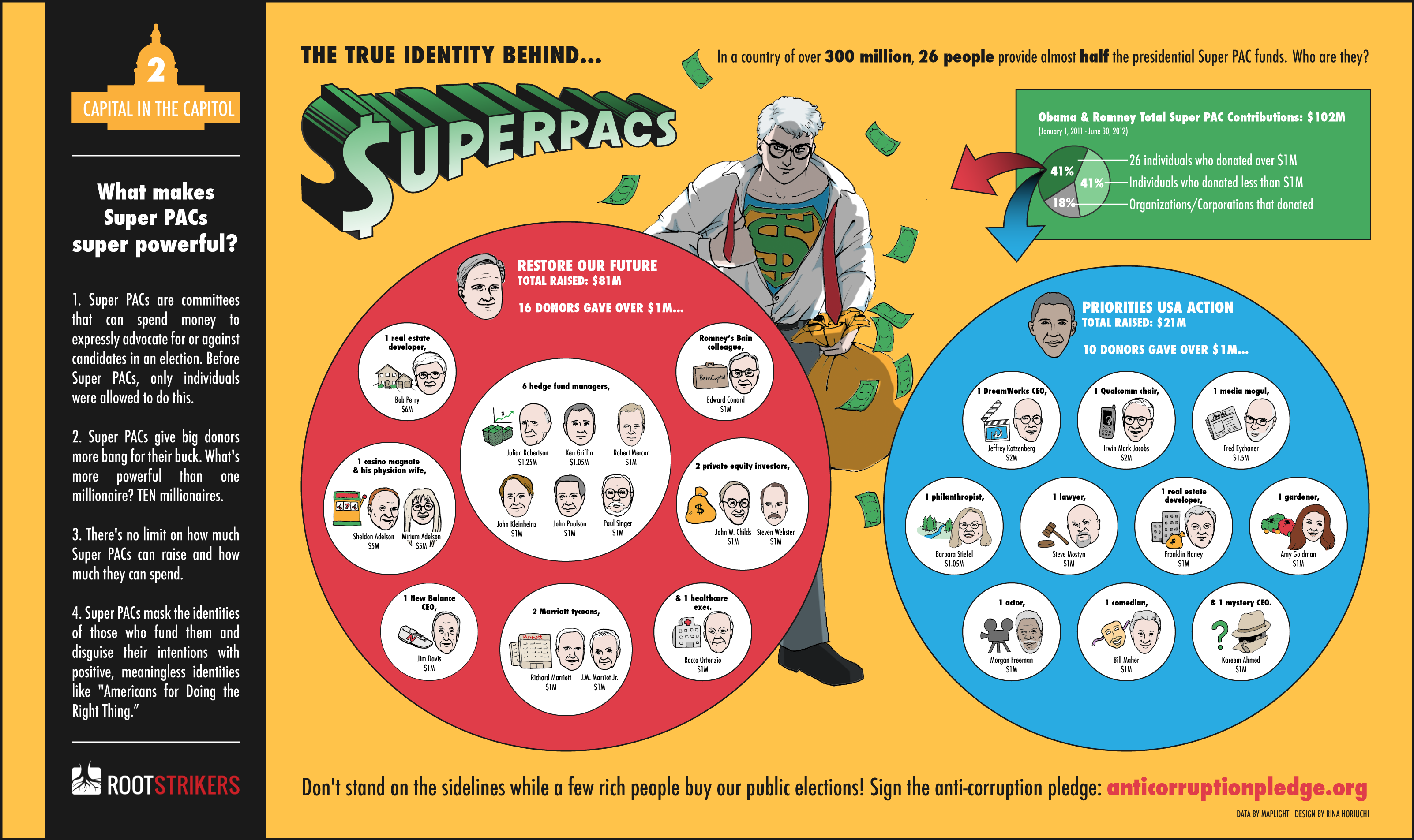
Stunning Statistics of the Week: (from Public Citizen)
- Amount the U.S. Chamber of Commerce spent on lobbying in 2009: $120 million
- Amount Chamber spent daily to defeat health care reform in the weeks before its passage: $800,000
- Amount Chamber plans to spend to influence the fall congressional elections: $50 million
US Democracy's End of the Road (1/23/2010)
Connecticut Senate Votes to Remove Rell's Power to Appoint a U.S. Senator (5/29/2009)
Still Broken (New York Times editorial 3/17/2009)
4 to 5 million voters disenfranchised in 2008 according to MIT study (3/11/2009)
Greg Palast and Robert F. Kennedy Jr., in research done for Rolling Stone magazine, have found that states have purged 10 million names from their voter rolls since the last presidential election and more than 2.7 million have had their registrations rejected under new procedures signed into law by George W. Bush. (From The Progressive Populist.)
How Republicans Win (8/29/2008);
Republicans suppress minority, student, and poor votes. (10/24/2008)
How Republicans hacked the Justice Department (from Harper's Magazine: March 2008)
The Republican War on Voting (American Prospect April 2008)
A google search for Republican Dirty Tricks turns up 131,000 results. Underhanded behavior has been standard operating procedure since Nixon, and his proteges have used it extensively. See this.
How Republicans Swing Elections (April 15, 2008)
Ohio Election Stolen Again ? (8/13/2008)
Without a Quorem, the Federal Election Commission ceases Oversight Activity (4/21/2008)
Paper ballot bill goes down in House after the White House intervenes (4/18/2008)
The Presidential election CAN be hacked (April 10, 2008)
Voter ID Fraud (January 2008)
50 States face voting rights lawsuit. (Nov 13, 2007)
Uncounted (the movie) At least see the trailer. Better yet, buy a copy.
Greg Palast's reporting on 'voter caging'
SOS from US Voters: Send International inspectors
;
Electoral College
Electoral College--Flunking Out?
The Electoral College, Mathematics, and Politics (a video lecture that details the undemocratic nature of US elections by Alexander S Belenky, MIT visiting scholar. About 73 minutes).
About Election 2014
Voter
Suppression in Florida Hits New Low (4/25/2014)
No,
You Can't Vote: The GOP and Its "15 Percent Solution" (4/8/2014)
How Not to Enforce Campaign Laws
G.O.P.
Bid to Limit Voting in Swing States (3/30/2014)
GOP War on Voting Rights (2/12/2014)
Congressional GOPers Try to Stymie IRS Regulation of Dark Money (2/7/2014)
The
Meaninglessness of Elections (7/11/2013)
Simple Steps to Eliminate Gerrymandering (3/6/2013)
A
Global Spotlight on Voter Suppression (2/27/2013)
Elections
Performance Index: Pew Charitable Trust
The
Great Gerrymander of 2012 (2/2/2013)
GOP
Plan to Take The Electoral Vote-Rigging Scheme National
(1/25/2013)
Sign this petition for Election
Reform
Anonymous
claims to have foiled carl Rove's Voter Fraud
(11/19/2012)
Redistricting: The Easiest Way To Steal an Election (11/24/2012)
How
to Rig An Election (11/2012)
Why Democrats And Media Deny Election Rigging (11/5/2012)
The Election as Marketing Spectacle (11/2/2012)
It's
Come to this: International Monitors needed for US
elections (10/21/2012)
Anonymous
Billionaires are stealing your election
(8/20/2012)
The Greatest Election Conspiracy in US History (8/10/2012)
7 Ways to Beat the Ballot Bandits (8/5/2012)
The
Massive Voter Fraud of the GOP (8/1/2012)
GOP Filibusters Disclosure (7/20/2012)
GOP Voter Suppression (6/21/2012)
Elections
Are For Suckers (2/9/2012)
The
Handful of White People Who Choose Your Presidential
Candidates (1/1/2012)
Effort
to Remove Money From Politics (10/26/2011)
The GOP War On Voting (9/1/2011)
Cutting Through Hype, Hypocrisy In Voter Fraud Claims
The Myth of Fair Elections in America
A Short History of Conservative Vote Suppression
Videos
An Unreasonable Man (Ralph Nader)
Hacking Democracy
Watch Hacking Democracy (video on-line for free).
by Susan Pynchon, Florida Fair Elections Coalition - March 27, 2007The documentary film "Hacking Democracy", originally broadcast
on HBO, is being released today on DVD. The film takes a
nonpartisan, clear-eyed look at the secrecy, cronyism, and
incompetence of elections in present-day America as it captures a
citizen's movement intent on taking back elections--and democracy
itself.
For me personally, I know that talking to legislators who have seen
this movie is like night and day compared to those who haven't seen
it. The film definitely makes the "light bulb" go on as far as the
vulnerability of electronic voting systems. I wish I could afford
to send a copy to every legislator in the U.S.
Christine Jennings (Florida CD-13 contested race) has said, for
example, that she has seen the movie twice. A local candidate in
Volusia County who saw the film demanded a ballot inspection of her
race (full manual recounts aren't allowed in Florida) and did
public records requests to our supervisor of elections to get
information on the memory cards used, something a typical candidate
would normally not think of doing.
The DVD, available at HackingDemocracy.com, contains "extra" segements not included in the original film, including great footage from Riverside California (Michelle Townsend); Cuyahoga County, Ohio; Volusia County, Florida; Glades County, Florida; and more.
On the website, you can also see fascinating TV footage of the trial and sentencing of the Ohio election workers in Cuyahoga County. Russ Michaels, one of the directors and producers of "Hacking Democracy," says the website will be adding more footage all the time from their vast store of film segments from elections around the country.
HBO Documentary Hacking Democracy
Electile Dysfunction
See also Electile Dysfunction (1 hr 28 mins) from 2008
Gerrymandering (video on-line for free).
How
the GOP bought, rigged, stole and lynched the 2014 election
Check out these web sites for related information.
Crisis Papers on Election Fraud
William Rivers Pitt comments.
VerifiedVoting.org is
a nonpartisan, nonprofit organization championing reliable and
publicly verifiable elections. Founded by Stanford University
Computer Science Professor David Dill, the organization supports a
requirement for voter-verified paper ballots for elections,
allowing voters to inspect individual permanent records of their
ballots and election officials to conduct meaningful audits and
recounts.See this link
also.
Johns Hopkins Analysis of Voting Machines
https://www.jhuisi.jhu.edu/
; Evidence Mounts that the Vote Was Hacked
; https://www.truthout.org/docs_04/110804Z.shtml
; Worse Than 2000: The 2004 Electoral Disaster
; https://www.truthout.org/docs_04/110804A.shtml
; Kerry Won. . .
; https://www.tompaine.com/articles/kerry_won_.php
; Ohio Machine Error Gives Bush Extra Votes
;
https://story.news.yahoo.com/news?tmpl=story&u=/ap/20041106/ap_on_el_pr/voting_problems&cid=694&ncid=1963&sid=96378798
; Broward machines count backward (this link is no longer available.)
;
https://www.palmbeachpost.com/politics/content/news/epaper/2004/11/05/a29a_BROWVOTE_1105.html
Statistical analysis of the election disparity
Dr. Steven Freeman of the University of Pennsylvania presents a statistical analysis of the disparity between exit polling data and reported votes in three critical states, including Ohio. He concludes that the odds of these disparities being accounted for by chance is around one in one thousand for each state and around one in two hundred and fifty million for the three states taken as a whole.; The impact of this study is that there needs to be an investigation of the possibility of voting fraud in Ohio, and the nation as a whole, in addition to a recount.https://www.ilcaonline.org/freeman.pdf
See Myth Breakers: Facts about
Electronic Elections
Voting machines are not the only problem though. Candidates may
have a message that people like, but once elected they feel free to
shape the agenda any way they want. Our Congress is taking action
that only Corporations could support, and they are not being held
accountable. Intense, well funded lobbying diverts Congress
from an agenda that benefits people to one that is pretty much
written by corporations. (One of the dictionary definitions of
Fascism is control of the government by corporations.) Since media
is a corporate offspring, people have no real
way to shape the agenda. Mainstream media is mostly about
distraction. Here are the common media
techniques for suppression of the truth: https://www.dabney.com/wacomuseum/library/martin1.html
It is public information that the US CIA has rigged elections in many other countries. Since our President is the son of a former CIA director, brother of the Governor of the State of Florida, are you surprised that there is election fraud in the US as well ?
If these were not enough reasons to
distrust US elections, recall the dirty tricks that occurred about the time
of Watergate, or Reagan's October surprise. 2004
COLLECTED VOTE FRAUD STORIES are at this link:
https://memes.org/modules.php?op=modload&name=News&file=article&sid=3627&mode=thread&order=0&thold=0
See Tom Hartman's views at; https://www.commondreams.org/views04/1104-38.htm
See Greg Palast's Blog for
other details. It takes the foreign press to do serious
investigative journalism now.
For anyone paying attention, US liberal leaders also tend to die more frequently than most under poorly explained circumstances.
(Bush wins Florida video) https://www.boomchicago.nl/Section/Videos; The People's Email Network
; https://www.thepen.us/e-fraud.html
; Contact info for state election directors
;
https://cadca.org/CoalitionResources/ElectionGuide/EG-Appendix3.asp
; Great Congressional guide to local media by state.
; https://www.congress.org/congressorg/dbq/media/
https://www.social-informatics.net/evoting.htm
Find contact info for all senators, representatives and Secretaries of State
; https://www.firstgov.gov/Contact/Elected.shtml
If you are not discouraged by all this, you can register to vote here.
If you experience problems at the polls this season, please call the Election Protection
hotline for help and information.
The number is 1-866-OUR-VOTE (1-866-687-8683). Download the
flyer
Bibliography
- How to Steal A Presidential Election Lawrence Lessig with Matthew Seligman
- Election Meltdown: Dirty Tricks, Distrust, and the Threat to American Democracy by Rick Hasen
- Disproven: My Unbiased Search for Voter Fraud for the Trump Campaign, the Data that Shows Why He Lost, and How We Can Improve Our Elections by Ken Block (3/12/2024
- How Trump Stole 2020 Greg Palast
- Election Meltdown: Dirty Tricks, Distrust, and the Threat to American Democracy: Richard Hasen
- RATF**KED, The True Story Behind the Secret Plan to Steal Americas Democracy: David Daley
- One Person, No Vote, How Voter Suppression Is Destroying Our Democracy: Carol Anderson
- Plutocrats United, Rick Hasen
- The
Great Suppression, Voting Rights, Corporate Cash and the Conservative Assault on Democracy: Zachary Roth
- One Person,No Vote: How Voter Suppression is Destroying Our Democracy, Carol Anderson
- Ratf**cked,
How the Democrats won the Presidency but Lost America: David Daley
- Give
Us The Ballot: Ari Berman
- The Voting Wars: Richard Hasen
- The Voting Rights War: The NAACP and the Ongoing Struggle for Justice: Gloria Browne-Marshall
- Grand Illusion: The Myth of Voter Choice in a Two-Party Tyranny: By Theresa Amato, The New Press.
- Democrips and ReBloodlicans, No More Gangs in Government: Jesse Ventura
- The Party Decides: Presidential Nominations Before and After Reform: Marty Cohen, David Carol, Hans Noel, and John Zaller.
- Buying the Vote: Robert Mutch
- Electoral Dysfunction: Victoria Bassetti
- What Went Wrong in Ohio, the Conyers Report on the 2004 Presidential Election, edited by Anita Miller
- Vincent Bugliosi, The Betrayal of America: How the Supreme Court Undermined the Constitution and Chose Our President, (2001) ISBN 1-56025-355-X
- Greg Palast Armed Madhouse
- Billionaires & Ballot Bandits: How to Steal an Election in 9 Easy Steps: Greg Palast
- Allan Raymond, How to Rig an Election: Confessions of a Republican Operative
- American Conspiracies: Jesse Ventura
- Gaming the Vote, Why Elections Aren't Fair (and What We Can Do About It): William Poundstone
- Loser Take All, Election Fraud and the Subversion of Democracy, 2000-2008: Mark Crispin Miller.
- Fooled Again: The Real Case for Electoral Reform: Mark Crispin Miller. 2007
- The Best Democracy Money Can Buy: Greg Palast 2003.
- Just How Stupid Are We ? Facing the Truth about the American Voter: Rick Shenkman
- Alexander S Belenky ;How America Chooses its Presidents
- Alan M. Dershowitz, Supreme Injustice: How the High Court Hijacked Election 2000, (2001) ISBN 0-19-514827-4
- Bob Fitrakis, Did George W. Bush Steal America's 2004 Election?, (2005) ISBN 0-9710438-9-2
- Steve Freeman and Joel Bleifuss, Was the 2004 Presidential Election Stolen?: Exit Polls, Election Fraud, and the Official Count, (2005) ISBN 1-58322-687-7
- H. Gillman, The Votes That Counted: How the Court Decided the 2000 Presidential Election, (2001) ISBN 0-226-29408-0
- Anita Miller, What Went Wrong In Ohio: The Conyers Report On The 2004 Presidential Election, (2005) ISBN 0-89733-535-X
- Bob Fitrakis, Steve Rosenfeld, Harvey Wasserman: What Happened in Ohio: A Documentary Record of Theft and Fraud in the 2004 Election ISBN 1595580697
- Mark Crispin Miller, Fooled Again, (2005) ISBN 0-465-04579-0
- Ellen Nakashima, Washington Post, et al., Deadlock: The Inside Story of America's Closest Election, (2001) ISBN 1-58648-080-4
- New York Times, 36 Days: The Complete Chronicle of the 2000 Presidential Election Crisis, (2001) ISBN 0-8050-6850-3
- David North, The Crisis of American Democracy: The Presidential Elections of 2000 and 2004, (2004) ISBN 1-875639-36-5
- Richard A. Posner, Breaking the Deadlock: The 2000 Election, the Constitution, and the Courts, (2001) ISBN 0-691-09073-4
- Jack N. Rakove (ed.), The Unfinished Election of 2000, (2002) ISBN 0-465-06838-3
- Larry J. Sabato, Overtime! The Election 2000 Thriller, (2001) ISBN 0-321-10028-X
- Jake Tapper, Down and Dirty: The Plot to Steal the Presidency, (2001) ISBN 0-316-83264-2
- Jeffrey Toobin, Too Close to Call: The Thirty-Six-Day Battle to Decide the 2000 Election, (2002) ISBN 0-375-76107-1
- Conned: How Millions Went to Prison, Lost the Vote, and Helped Send George W. Bush to the White House. Sasha Abramsky