Health Care
Republican Leaderships Death Sentence for Thousands of Americans (5/21/2025) Bernie Sanders
Republicans Can’t Hide Medicaid Cuts in a ‘Big, Beautiful’ Bill (5/23/2025)
Forget the DEI hires – meet Trump’s latest WTF hire (5/16/2025)
NIH research cuts threaten the search for life-saving cures and jobs in every state (4/6/2025)
Gutting US health agency will allow for private sector takeover, experts warn (3/29/2025)
Thousands of the best experts at FDA, NIH, and all across HHS are being terminated right now.
— Craig Spencer MD MPH (@Craig_A_Spencer) April 1, 2025
These are the people who make sure the medications you and your children take are safe.
These are the people who perform and oversee research on cancer, infant health, and so so so…
Top vaccine official resigns from FDA, criticizes RFK Jr. for promoting “misinformation and lies” (3/29/2025)
Trump administration to cut billions in medical research funding (2/8/2025)
CDC webpages go dark as Trump targets public health information (2/4/2025)
US federal websites scrub vaccine data and LGBT references (2/1/2025)
Thought UnitedHealthcare couldn’t get more awful? They’ve gone villain mode (1/14/2025)
Annual ‘winners’ for most egregious US healthcare profiteering announced (1/7/2025)
This is some of what we must do to reform our dysfunctional healthcare system Bernie Sanders (12/31/2024)
American doctors hate the health care system almost as much as you do (12/19/2024)
The Business of Sickness: How Healthcare Became a Legalized Cartel (12/7/2024)
Meet Jack D. Ripper, the New Health Czar (11/8/2024)
Incoming Trump presidency threatens millions of Americans’ healthcare plans (11/8/2024)
Will Trump Have a New Opening to Repeal Obamacare? (11/7/2024)
Mike Johnson promises 'massive' healthcare changes if Trump wins (10/30/2024)
Authoritarian Project 2025 Agenda Endangers the Future of Medicaid and The Affordable Care Act (9/10/2024)
I’m a Doctor, and I’m Worried About What Comes Next for Our Health Care System (9/23/2024)
Trump’s Project 2025 abolishes Medicare; We need to Fight Back and Expand it (7/21/2024)
Primary Care in the Crosshairs of Market Structure Changes (6/12/2024)
There are 35 billionaires in US healthcare (4/2/2024)
Patients, Advocates Push Biden to ‘Reclaim Medicare’ From Privatized Medicare Advantage (3/19/2024)
The Failing Battle for Healthcare in the Dis-United States (3/11/2024)
'Hell No!': Trump Allies' Plan to Privatize Medicare Draws Alarm and Outrage (2/10/2024)
How could the United States devote so much money to health care and yet rank so poorly relative to other industrialized countries in key indicators of the nation’s health? Per capita, the United States spends nearly double what some of its peers spend, but Americans lag behind in terms of life expectancy, infant mortality, low birth weight, injuries and homicides, adolescent pregnancy and sexually transmitted diseases, HIV/AIDS, drug-related deaths, obesity, diabetes, heart disease, chronic lung disease, and disability rates. (1) Some have argued that Americans’ comparatively poor health is due to the larger proportion of people living in poverty in the United States than in the more generous welfare states of Scandinavia and Western Europe, but this thinking fails to explain why this poorer health ranking holds for Americans who are white, educated, employed, and high-income. (2) We have suggested that previous calculations have omitted an aspect of spending that is critically important for national health outcomes. This is spending on social services, an area in which the United States spends far less relative to its GDP than its peer countries. The new math unravelled the paradox. If we add together what countries spend on health care and what they spend on social services, the United States’ place in the ranking of industrialized countries shifts considerably. This sum of spending is what might be called the national investment in health. In looking at the sum, no longer does the United States appear to be a massively big spender. Americans’ spending on social services is far less per capita than that of counterpart countries. Taking both health care and social service spending into account, the United States spends a fairly average sum compared with its peer countries and, we argue, has fairly average health outcomes as a result. The American Health Care Paradox: Why Spending More Is Getting Us Less, Elizabeth H. Bradley and Lauren A. Taylor
No amount of propaganda can blur the basic fact about American commercial medicine. We pay a huge premium for the privilege of dying younger. Timothy Snyder's book Our Malady
Other industrialized nations are making the morally principled and financially responsible decision to provide universal health care to all of their people—and they do so while saving money by keeping people healthier. Those who say this goal is unachievable are selling the American people short. Senator Bernie Sanders
Republicans already have a plan to rapidly privatize Medicare if Trump wins.
— Robert Reich (@RBReich) February 25, 2024
Tucked deep into Project 2025 is a call to “make Medicare Advantage the default enrollment option.”
This would be a historic handout to the insurance industry.
And the death of Medicare as we know it.
Most developed countries have humane, tax funded, less expensive, healthcare covering everyone, sick people are not driven into debt or bankruptcy, public health more effective, population healthier and more stable. New Medicare-for-All Legislation introduced by Sanders, Jayapal, Dingell, others: Why is the greatest Health System in the World only for the Affluent? (5/22/2023))
A single-payer, universal health care system in the U.S. would save >68,000 lives and more than $450 billion annually, writes YSPH Prof. Alison Galvani and colleagues in the current issue of The Lancet. https://t.co/Ktww0RVcJa @YaleEMD
— YaleSPH (@YaleSPH) February 14, 2020
Physicians for a National Health Program
National Committee to Preserve Social Security and Medicare
Public Citizen: Health and Safety
Physicians For Social Responsibility
International Cost Comparisons
HealthCare Resource Guide (Ct Magazine)
Association of Health Care Journalists
Alliance For Human Research Protection !!!
Connecticut Citizen Action Group
Consumer Reports Health (ranks 3000 hospitals) $
HealthRatings.org: Ratings of Health Web Sites.
How does US health care compare to other countries ?
US and Britain ranked last in child welfare.
stop hospital infections (www.stophospitalinfections.org an initiative of Consumer Reports.)
reduce prescription drug prices and make drugs safer (www.prescriptionforchange.org)
The Medicare Privatization Scam
Congressional Research Service Report. (2007)
A reminder on today's 10 year anniversary of the Affordable Care Act: Trump wants to "terminate it" in the midst of the #Coronavirus crisis.
— Nancy Pelosi (@TeamPelosi) March 23, 2020
We, on the other hand, will not stop fighting to #ProtectOurCare and put #FamiliesFirst. pic.twitter.com/Ikr8vmozqD
US healthcare is more expensive than any other country and does not produce better results. You won't hear that because it might offend insurance or pharma advertising: another example of media extortion. Reasonable solutions cannot be considered because powerful, well funded corporate interests and the GOP block them. Other social programs, which are mostly privatized are also doing poorly including childcare, seniorcare, housing, food, medicine, are not up to standards of the developed world. The military, however, got more funding than it asked for.
Why is it so difficult to recognize that public health systems are much less expensive and better performing than private ?
The whole point of privatization is to facilitate a corporate feeding frenzy at the expense of the taxpayer and the sick. Although privatized healthcare is much more expensive, corporations get to profit from the sick. Often the poor, uninsured pay much more for their treatment, a frequent cause of bankruptcy.
It was always a mistake to put the burden of healthcare on employers. It suppresses job mobility, creates bureaucracy in large companies to deal with the problem, allows insurers to redline some companies, it leaves out many people who are not in the job market for whatever reason, has mediocre outcomes, and is much more expensive than other developed countries. Canadian healthcare performs much better.
For all that expense, Americans had poorer health outcomes, including shorter life expectancy and greater prevalence of chronic conditions. U.S. Has The Worst Rate Of Maternal Deaths In The Developed World. This likely is connected to the Republican disdain for women´s health services.
We are one of only two countries in the world to allow direct to consumer pharmaceutical advertising (the other is New Zealand.) Because some companies charge ruinous prices for life-saving drugs, we should regulate drug prices, or at least allow prescriptions to be filled in Canada. Regular evening ads buy off media. American healthcare is a feeding frenzy for corporate America including media, Pharma, Computer software vendors, hospitals, and others. Large contributions to lobbyists and politicians insure there will be no change or even a repeal of the ACA.
Obamacare was based on a Republican idea that Mitt Romney fairly successfully implemented in Massachusetts. Still, we spend more than two-and-a-half times more than most developed nations in the world, including relatively rich European countries like France, Sweden and the United Kingdom.
Republicans were unable to repeal and replace Obamacare, so they are undermining it and making it even worse. A much simpler Medicare for all solution would be a great improvement on Obamacare. If Republicans cannot at least improve what we have, they should do nothing at all. Based on their performance, they should be voted out of office as soon as possible.
A Medicare-for-All system could save an enormous amount by bringing expenses in line with the rest of the developed world, and it could cover everyone. It would likely slow the ongoing collapse of the middle class. Even the CEO of Aetna thinks it’s a good idea. The bill for the public service would be much less than the private bill.
A new report found that the for-profit US healthcare system ranks last among peer nations.
— Robert Reich (@RBReich) September 20, 2024
We spend twice as much per capita on healthcare and have the worst health outcomes.
Reminder that Medicare For All would save $450B in health care costs and 68,000 lives per year.
Expanding Medicare to include dental, vision, and hearing benefits is so “radical” it only has the support of 92% of the American people — including 95% of Democrats and 89% of Republicans.
— Bernie Sanders (@SenSanders) May 24, 2024
It’s time Congress listened to the American people, not the insurance companies.
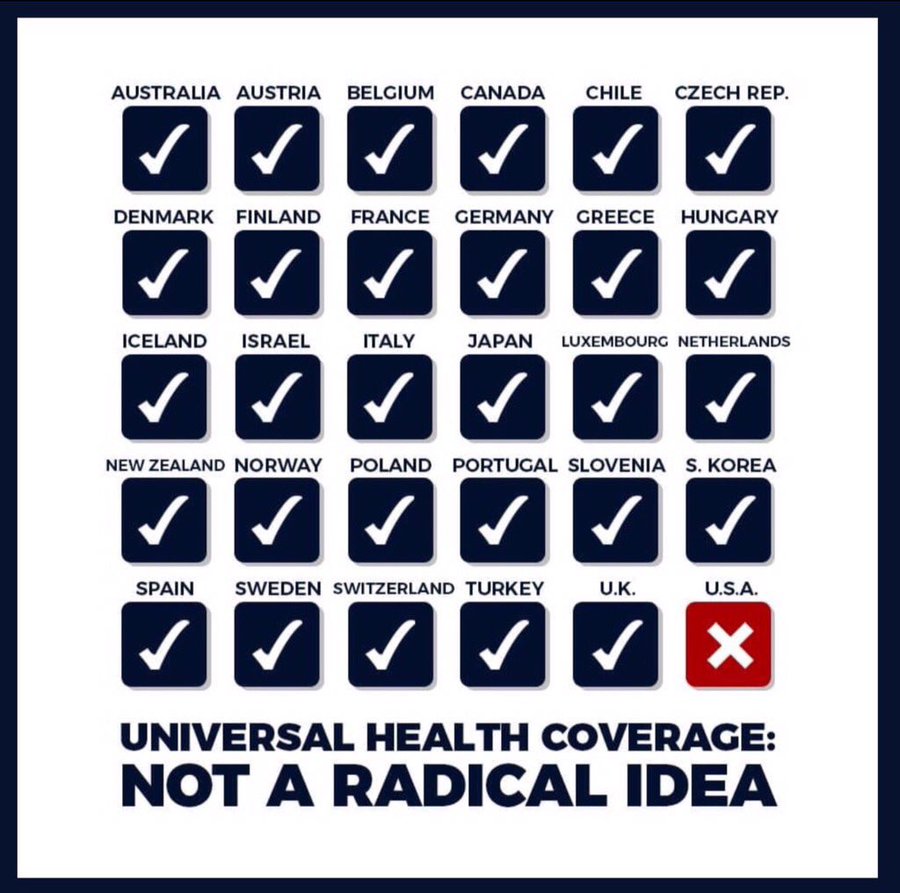
Countries with Universal Healthcare 2023
While rural Americans often tell reporters that they feel neglected and ignored by big-city coastal elites, the people preventing them from getting health care aren’t in New York or D.C., they’re in their own state capitals. And these state politicians hold power in large part thanks to the strong Republican leaning of rural voters. Self-Inflicted Medical Misery, Red America’s homemade rural health crisis. (6/24/2019)
“Medicine is social science and politics nothing but medicine on a grand scale.” Dr.Rudolph Virchow
Medicare turns 58 today. It's almost old enough to be on Medicare!
— Robert Reich (@RBReich) July 30, 2023
Republicans keep trying to cut it, but what we really need to do is expand it.
Here's why Medicare For All is not just good health policy, it's good economic policy. pic.twitter.com/ib4FIKq66J
Doctors and insurers clash over US law that protects against surprise billing (9/29/2023)
How Do We Fix the Scandal That Is American Health Care? (8/16/2023)
It’s time to guarantee healthcare to all Americans as a human right Bernie Sanders (5/18/2023)
Congress must listen to working families and overhaul healthcare, minimum wage and education (1/9/2023)
Stop the Medicare “Advantage” Scam Before Medicare is Dead (8/5/2022)
How to Fight the New GOP Scheme To Kill Social Security & Medicare (8/4/2022)
Why Public Health Faces a Crisis Across the U.S. (10/18/2021)
Understaffed, underfunded, under siege: US public health amid COVID-19 (10/15/2021)
Science Alone Can’t Heal a Sick Society (9/10/2021) NYT
Stunning new report ranks US dead last in health care among richest countries—despite spending the most (8/6/2021)
Are Healthcare Parasites Sucking Americans Dry? (8/2021)
“They've Been Doing It Forever” (6/25/2021)
Insulin is now capped at $35 for Americans on Medicare.
— Adam Schiff (@RepAdamSchiff) January 2, 2023
Every single Republican voted AGAINST lowering the cost.
While Democrats voted FOR lowering your health care costs.
We know what side Republicans in Congress are on. And it isn’t yours.
They Say They Are Attacking Abortion. They Are Really Hurting the Poor. (2/16/2021)
America’s New Peculiar Institution: Health Care only for those who Can Afford it (10/11/2020)
Which Country Has the World’s Best Health Care? by Ezekiel J. Emanuel
Taking health back from corporations: Pandemics, big pharma and privatized health (8/5/2020)
This issue crystallizes a chasm between the parties. The #ACA emphasizes solidarity, with young/healthy paying more to ensure access for older/sick. GOP plans stress individual autonomy over solidarity & free-market over gov't regulation. In practice, that means the sick lose out https://t.co/MYOMDvGvaD
— Ronald Brownstein (@RonBrownstein) October 5, 2020
In the context of the coronavirus response, the degradation of expertise in the Trump administration has been catastrophic. It has been difficult to watch CDC director Robert Redfield pander to the commander in chief day-after-day as this crisis unfolds. There are experts who are surely ready to do the right thing—many of the career civil servants in Atlanta are superb public health physicians, scientists, and practitioners—but the administration’s course on coronavirus seems to be more responsive to a president worried about reelection and about bad news that might derail his chances in November than the virus in their midst. In fact, most of the appointed health officials in the administration, from Secretary of Health and Human Services Alex Azar to Surgeon General Jerome Adams, have emerged as cheerleaders and sycophants, aiding and abetting the disinformation coming out of the White House by their refusal to correct the president’s errors in real time. Alone Against the Virus: Amy Kapczynski, Gregg Gonsalves
We have ... watched American hospitals, long understaffed and undersupplied, buckling under waves of coronavirus patients. The federal government made matters worse through willful ignorance, misinformation, and profiteering. Our system of commercial medicine failed the ultimate test, and thousands of Americans died. see Timothy Snyder's book Our Malady
The Trump Admin and the State of Texas are trying to repeal the #ACA and put the health care of tens of millions at risk.
— NY AG James (@NewYorkStateAG) May 6, 2020
I'm taking action with a coalition of states to defend the #ACA in the Supreme Court and ensure Americans have access to quality, affordable health care.
Why I’m Obsessed With Patients' Medical Bills (8/8/2020)
Medicare Turns 55: Let’s Celebrate by Covering Everyone! F. Douglas Stephenson (08/01/2020)
G.O.P. Faces Risk From Push to Repeal Health Law During Pandemic (6/22/2020)
Nearly 27 million Americans may have lost job-based health insurance, study shows (5/13/2020)
The Trump Virus (3/27/2020)
Local doctor: COVID-19 exposes weaknesses of health care, leadership (3/23/2020)
How testing failures allowed coronavirus to sweep the U.S. (3/8/2020)
Trump Could Profit From Coronavirus Testing (3/6/2020)
Trump has committed to taking away your healthcare. Got preexisting condition coverage under Obamacare? Trump will take it away. During a pandemic. https://t.co/5dKNG9KJTT
— Joyce Alene (@JoyceWhiteVance) May 6, 2020
Medicare For All Would Save More Than 68,000 Lives And $450 Billion Every Year, According To New Study (2/2020)
When a Pandemic Meets a Personality Cult (2/27/2020)
Trump Makes the American Health Care System Even Worse (2/22/2020)
US underprepared for coronavirus due to Trump cuts, say health experts (1/31/2020)
Outbreaks of lethal diseases like Ebola and the Wuhan coronavirus happen regularly. The US government just cut funding for the hospitals that deal with them (1/22/2020)
To the Contrary, Trump Has Tried to Weaken Protections for Pre-existing Conditions (1/13/2020)
Trump’s Plot Against Health Care Continues, He is still coming for your coverage — and lying about it. (01/13/2020)
American families are paying an $8,000 tax because of the greed of the health care industry. Don't take it from me. Take it from these economists.
— Bernie Sanders (@SenSanders) January 8, 2020
Medicare for All means huge savings for working people and guaranteed health care for all. https://t.co/2DQzsBalRb
Economists 'Surprised Americans Aren't Revolting' Over $8,000 Tax They Pay Each Year Due to For-Profit Healthcare System (01/07/2020)
Did Warren Pass the Medicare Test? I Think So (11/1/2019)
Would ‘Medicare for All’ Save Billions or Cost Billions? (10/16/2019)
The Huge Waste in the U.S. Health System (10/7/2019)
The Health 202: The Trump administration considered defending the ACA in court (9/27/2019)
Does Anyone Really ‘Love’ Their Private Health Insurance? (9/17/2019)
President Trump and Republicans in Congress are cheering on a lawsuit that would dismantle the Affordable Care Act overnight. The only problem? They have no idea what their plan is if they succeed. pic.twitter.com/OIRWVx15Xp
— Chris Murphy (@ChrisMurphyCT) July 22, 2019
“I want to end the international embarrassment of the United States being the only country in the industrialized world that does not guarantee health care as a right and not a privilege.” Bernie Sanders
The Trump administration is trying to strip healthcare from millions of Americans and return us to the days of pre-existing conditions.
— Ro Khanna (@RoKhanna) July 18, 2019
We can’t let them rollback all the progress we’ve made: Protect the ACA and fight for Medicare for All. pic.twitter.com/4cyZswuDyk
AMY GOODMAN: Talk about healthcare.
DAVID CAY JOHNSTON: Well, you know, healthcare in America is not a—we don’t have a system of healthcare, Amy. What we have is a system—a non-system system of sick care. We spend so much more money than the French, who have the best healthcare system in the world, according to the World Health Organization, that if we simply reduced our costs to those of France, we could eliminate the corporate income—or, the individual income tax. And think about that. Nobody would have to pay individual income tax, and we could have universal healthcare, and all else would be equal in our economy. And yet, at some point during the year, one in four Americans will not have health insurance, and about one in six will go the whole year without health insurance. We have created a—it’s part of how we are creating a privatized set of rules, sponsored by government, to redistribute upward. And that’s the whole scheme here. It is to redistribute income upward in a way that a market economy would never do that, but a corporate socialist economy, where corporations are able to privatize gains and make you pick up their losses, that’s the kind of economy that we’re moving into. (Democracy Now! interview with David Cay Johnston discussing his book: The Fine Print, How Big Companies use "Plain English" to rob you blind.)
This id why we need healthcare for all. As it stands now employers can hold healthcare benefits hostage to make employees work for low wages. That’s not right. Corporations & businesses hsve way too much power .
— Susan Benton (@susanbenton611) October 20, 2021
I’ve had quite a bit of success in #conservative districts while canvassing for #Bernie. Here is a video I used yesterday to turn 19 senior Californians to Bernie! Anyone canvassing for #Bernie2020, feel free to use it! #BenefitsOfM4A for Seniors that #OnlyBernie talks about! pic.twitter.com/4Stb4MclG5
— Vozable.com | Noah (@Vozable) November 17, 2019
The health care system in the United States is an international scandal, with per capita costs far higher than comparable countries, relatively poor outcomes, and tens of thousands with no guaranteed health care at all. What is worse still, the current Republican wrecking-ball is aimed at ruining it even more. The core problem is the severe inefficiency of privatization and the immense political power of private capital, which repeatedly overrides popular will and legitimate needs. The incisive essays included here unravel the deep institutional roots and serious flaws of this failing system and indicate directions that can lead to establishing decent health care as a fundamental human right. —Noam Chomsky, Institute Professor Emeritus, Massachusetts Institute of Technology; (from a book review of Health Care Under the Knife)
This is a stunning story.
— Ashish K. Jha, MD, MPH (@ashishkjha) February 3, 2021
And no surprise that the brilliant @sarahkliff uncovers and tells it.
How rich "non-profit" hospitals actually profit quite handsomely from poor patients in car accidents.https://t.co/agaeYHnHty
Trump hasn’t managed to repeal Obamacare, but his officials have undermined the program’s efficiency, driving up premiums and reducing coverage. Meanwhile, deaths and illness due to the collapse of environmental enforcement will be one of Trump’s enduring legacies. Paul Krugman
The simple truth is that the United States remains the only economically advanced country without a viable national program that ensures access to needed care for all. As a result health care—and health—remain a commodity for sale. Until we in the United States decide to de-commodify our health care and health by implementing a universal, single, publicly financed, national health program such as Medicare for All, we will remain in our current state of ethical underdevelopment." Howard Waitzkin
The New Plot Against Obamacare (7/11/2019)
Health care spending per capita:
— Public Citizen (@Public_Citizen) August 24, 2019
🇬🇧 - $4,246
🇦🇺 - $4,543
🇯🇵 - $4,717
🇧🇪 - $4,774
🇨🇦 - $4,826
🇫🇷 - $4,902
🇳🇱 - $5,386
🇦🇹 - $5,440
🇸🇪 - $5,511
🇩🇪 - $5,728
🇨🇭 - $8,009
🇺🇸 - $10,244
It's our *current* system that's completely unaffordable.
The Trump Administration Is Creating a Health Nightmare Near the Border (8/25/2019)
‘Government-Run Healthcare’ Is a Product of Health Industry–Run Media (7/1/2019)
Self-Inflicted Medical Misery, Red America’s homemade rural health crisis. (6/24/2019)
Anti-Vaxxers Are Just as Bad as Climate Deniers (4/22/2019)
Republican Health Care Lying Syndrome (4/1/2019)
Donald Trump’s Latest Move to End Obamacare Is One of the Dumbest Things He Could Have Done Ahead of 2020 (3/26/2019)
Bill Barr Moves to Destroy ObamaCare and the Republican Party (3/26/2019)
Build Your Own ‘Medicare for All’ Plan. Beware: There Are Tough Choices. (2/27/2019)
Democrats Are Introducing Medicare-for-All With Actual Outside Support (2/27/2019)
Meet the Person Behind Trump’s War on Medicaid (Mother Jones 1-2/2019)
Conservative Elites Will Go to Amazing Lengths to Deny People Basic Healthcare (12/16/2018)
'Easy to pay for something that costs less': New study shows 'Medicare for All' would save US $5.1 trillion over 10 years (12/1/2018)
The Trump Administration Announced New Rules Further Dismantling Obamacare (11/29/2018)
Voters must catch on to Republicans’ con on health care (10/23/2018)
Don't trust the GOP with your health care (10/12/2018)
Republicans Take the Hypocrite’s Oath, On health care, a determination to deceive voters as much as possible. (9/27/2018)
Get Sick, Go Bankrupt and Die (9/4/2018)
Want Reliable Medical Information? The Trump Administration Doesn’t (7/20/2018)
G.O.P. to Americans With Health Problems: Drop Dead (6/15/2018)
The Plot Against Healthcare (5/28/2018)
In some ways, Trump pretending to be defender of Americans with preexisting conditions is his most astonishing lie yet. He's tried to take away that protection every step of the way, in full public view 1/ https://t.co/YmCKlpOIDv
— Paul Krugman (@paulkrugman) January 13, 2020
Tracking Trump’s Sabotage of the ACA (4/18/2018)
David J. Shulkin: Privatizing the V.A. Will Hurt Veterans (3/28/2018)
It Sure Looks Like The GOP Is Trying to Kill Us (3/13/2018)
A Proposal Designed to Confuse Public and Prevent 'Medicare for All' (2/23/2018)
Unconscionable Republicans delayed CHIP to use kids as a bargaining chip to sell out Dreamers. (1/17/2018)
Dollars, Cents and Republican Sadism (1/11/2018)
Leading Democrats Are Way Behind the Public on Health Care (10/25/2017)
Millions of Lives at Risk as GOP Lets CHIP Expire (10/4/2017)
Sen. Murphy thinks he can build an on-ramp to single-payer health care (9/8/2017)
The US Has the Highest Maternal Death Rate of Any Developed Country. Why Aren't We Doing More About It? (7/27/2017)
And Jesus Said Unto Paul of Ryan ... (3/16/2017)
Universal health care COULD NEVER WORK
— Public Citizen (@Public_Citizen) July 6, 2019
...unless you live in:
Australia
Austria
Belgium
Canada
Chile
Czech Republic
Denmark
Finland
France
Germany
Greece
Hungary
Iceland
Israel
Italy
Japan
Netherlands
New Zealand
Norway
Poland
Portugal
S Korea
Spain
Sweden
Switzerland
Turkey
UK
The Republican Health Care Zombie Is Back (9/19/2017)
Bernie Sanders: Why We Need Medicare for All (9/13/20170)
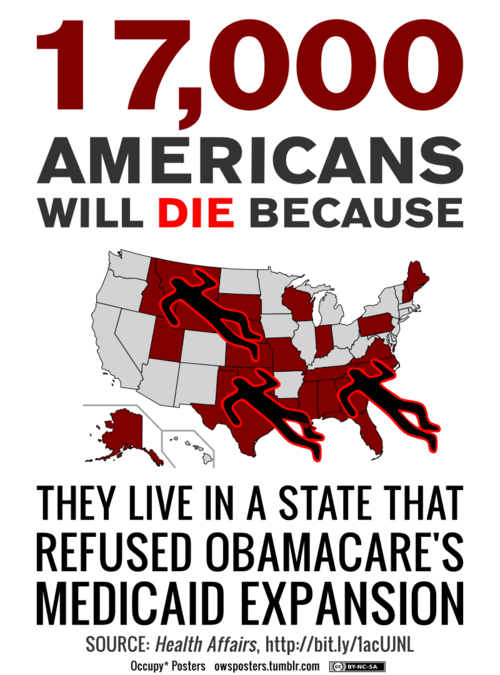
States that refused Medicaid expansion (Mostly poor, Republican States.)
https://www.medicareforall.org/pages/Know
Why So Many Democrats Are Embracing Single-Payer Health Care (7/18/2017)
A GOP stunt backfires, and accidentally reveals a truth Republicans want hidden (7/5/2017)
Senate Republicans Said Their Bill Wouldn’t Hurt The Poor. It Would. (6/27/2017)
“The Senate bill, unveiled today, is not a health care bill. It’s a massive transfer of wealth from middle-class and poor families to the richest people in America. It hands enormous tax cuts to the rich and to the drug and insurance industries, paid for by cutting health care for everybody else. Those with private insurance will experience higher premiums and higher deductibles, with lower tax credits to help working families cover the costs, even as their plans might no longer cover pregnancy, mental health care, or expensive prescriptions. Discrimination based on pre-existing conditions could become the norm again. Millions of families will lose coverage entirely.” Barack Obama 6/26/2017
UnitedHealth will stop at nothing to grow bigger, bigger and bigger.
— Elizabeth Warren (@SenWarren) May 1, 2024
For the sake of our patients, our doctors and nurses, and American taxpayers, it is time to break up the UnitedHealth monopoly. pic.twitter.com/rWH5FjynwG
It’s Time to Worry about Health Care in the Senate (5/23/2017)
Aetna’s surprising single-payer stance (5/12/2017)
Buffett: GOP Health Care Bill a Tax Cut for the Rich (5/7/2017)
The House Health Care Disaster Is Really About Taxes (5/6/2017)
Time for a Trump Carnage Index (5/6/2017)
Business Partnerships between Fitbit and Health Insurance Companies (4/11/2017)
Noam Chomsky: Our Privatized US Healthcare Program Is an "International Scandal" (4/5/2017)
GOP Lawmakers Now Admit Years of Obamacare Repeal Votes Were a Sham (3/21/2017)
Bernie Sanders Wants to Expand Medicare to Everybody — Exactly What Its Architects Wanted (3/31/2017)
"Thunderous Applause" Welcomes Sanders' Call for Medicare-for-All (3/27/2017)
The Republicans' Not-So-Secret Strategy to Pass TrumpCare (3/13/2017)
CBO: TrumpCare Would Wipe Out Coverage for 24 Million People (3/13/2017)
A Bill So Bad It’s Awesome [Paul Krugman] 3/10/2017
For the Insurance Lobby, Old Habits Are Hard to Break (2/15/2017)
8 Epic EHR implementations with the biggest price tags in 2015 (7/1/2015)
GOP
Prohibits CBO From Reporting How Much ACA Repeal Blows Up the Deficit (1/11/2017)
Universal Healthcare Is Great for Free Enterprise and Great for Small Businesses
The modern-day Republican Party would have us believe that those who promote universal healthcare are anti-free enterprise or hostile to small businesses. But truth be told, universal healthcare is great for entrepreneurs, small businesses and the self-employed in France, Germany and other developed countries where healthcare is considered a right. The U.S.’ troubled healthcare system has a long history of punishing entrepreneurs with sky-high premiums when they start their own businesses. Prior to the Affordable Care Act of 2010, a.k.a. Obamacare, many small business owners couldn’t even obtain individual health insurance plans if they had a preexisting condition such as heart disease or diabetes—and even with the ACA’s reforms, the high cost of health insurance is still daunting to small business owners. But many Americans fail to realize that healthcare reform is not only a humanitarian issue, it is also vitally important to small businesses and the self-employed.
In 2009, the Center for Economic and Policy Research published a study on small businesses around the world and found that “by every measure of small-business employment, the United States has among the world’s smallest small-business sectors.” People in the Netherlands, France, Germany, Sweden, Finland, Belgium and other European countries are more likely to be self-employed—and the study concluded that universal healthcare is a key factor. According to CEPR’s study, “High healthcare costs discourage small business formation since start-ups in other countries can tap into government-funded healthcare systems.” Alternet
Everything
you need to know about the GOP’s plan to repeal Obamacare
(1/14/2017)
Repealing
Obamacare Will Be Negligent Homicide (1/6/2017)
Republicans
Are Afraid to Let Americans See Their Health Care Plan (1/4/2017)
Media
Legitimizing GOP’s ‘Universal’ Health Plan That Doesn’t Exist(12/19/2016)
Trump’s Health Czar Tom Price is a One-Man Death Panel for Obamacare (11/29/2016)
*Clinton Said Single-Payer Health Care Systems “Can Get Costs Down,” And “Is As Good Or Better On Primary Care,” But “They Do Impose Things Like Waiting Times.” *“If you look at countries that are comparable, like Switzerland or Germany, for example, they have mixed systems. They don't have just a single-payer system, but they have very clear controls over budgeting and accountability. If you look at the single-payer systems, like Scandinavia, Canada, and elsewhere, they can get costs down because, you know, although their care, according to statistics, overall is as good or better on primary care, in particular, they do impose things like waiting times, you know. It takes longer to get like a hip replacement than it might take here.” [Hillary Clinton remarks to ECGR Grand Rapids, 6/17/13] From Wikileaks
50 Million Uninsured in the U.S. Equals 50,000+ Avoidable Deaths a Year. Why is this tolerated? The simple and unfortunately correct answer is because of the existence of the private health insurance industry and the hundreds of thousands of people who ... are being paid for their expertise in denying health care. (From the Public Citizen Health Letter January 2012)
We give ourselves license to spend half again as much as any other country in the world on healthcare, only to be ranked 37th ‘best’ by the World Health Organization, just so we don’t have to do the simple work of writing corporate predators out of the parasitic cash cow booty feeding troughs in which they’re entrenched. David Michael Green
"If you wonder why the United States is the only country in the industrialized world not to have a national health care program, if you're asking why we pay the highest price in the world for prescription drugs, or why we spend more money on the military than the rest of the world combined, you are talking about campaign finance. You are talking about the unbelievable power that big-money interests have over every legislative decision." Senator Bernie Sanders (Vt)
Will Republicans Try to Privatize Medicare in 2017? (11/20/2016)
"Every dollar not taken from Medicare could come from the hide of a tax-cut beneficiary, a defense contractor, or some other worthy and hungry mouth that needs feeding."
Local
Health System Performance, 2016 Edition
Cry Me
a River, Aetna: Wendell Potter (8/29/2016)
Aetna's
Greed Proves That Medicare-for-All Is the Best Solution (8/16/2016)
Sanders
Has It Exactly Right: Majority of Americans Want 'Medicare for All'
System (May 16, 2016)
Single-Payer
Health Care (12/24/2015)
Fewer
Patients Have Been Dying From Hospital Errors Since Obamacare Started
(12/2/2015)
Majority
of Americans Say Government Should Ensure Healthcare Coverage
(11/23/2015)
Single
Payer is the Only Hope: How the Health Insurance Industry is Devouring the Economy (11/9/2015)
With Mergers, Concerns Grow About Private Medicare (8/25/2015)
How
The Right-Wing Media Is Orchestrating A Public Health Crisis (8/21/2015)
Don't Privatize Medicare (3/26/2015)
GOP
congresswoman gets surprise on Facebook after asking constituents for Obamacare horror stories (3/26/2015)
This
Red State Almost Expanded Health Insurance to 280,000 Poor People -- Then Koch Group Got Involved (4/1/2015)
The
Future of the Affordable Care Act (3/27/2015)
Greed,
fear and other roadblocks to health care reform (2/19/2015)
Universal
Healthcare Advocates Renew Push Toward Medicare-For-All (2/4/2015)
Budget Cuts "Eroded our Ability to Respond to Ebola" (10/1/2014)
The GOP's 20 Year War On Healthcare (7/25/2014)
The Hobby Lobby Lesson: We Need To Fight For Single-Payer Health Care (7/1/2014)
US
Health System Ranks Last Among Eleven Countries on Measures of Access, Equity, Quality, Efficiency, and Healthy Lives (6/16/2014)
Health
Care Nightmares (4/10/2014)
Poll: Big Majority Wants To Keep Obamacare (3/13/2014)
Falsely
Presenting Obamacare as a Job-Killer (2/5/2014)
The Obamacare We Deserve (1/1/2014)
9,000
Texans will die needlessly per year because Republicans refuse to
expand Medicaid. (NEJM)
Racism
And Cruelty Drive the GOP Health Care Agenda (10/8/2013)
Health Care For All (Bernie Sanders) 10/6/2013
Hospital medical errors now the third leading cause of death in the U.S. (9/20/2013)
There won’t be any GOP alternative to Obamacare (8/20/2013)
The
Real Reason FoR The GOP's All Out War On Obamacare (8/11/2013)
Many Of The Counties Most In Need Of Obamacare Are Represented By Republicans Who Want To Repeal It (8/2/2013)
GOP support grows to force shutdown over funding ObamaCare (7/22/2013)
House 'Conservatives' Call For a New Vote To Kill Obamacare (4/24/2013)
Bitter
Pill: Why Medical Bills Are Killing Us (2/20/2013)
"Death
Panel" of GOP Governors Refuse Medicaid Expansion (1/8/2013)
ObamaCare:
A Blessing For Millions of Real Americans (7/3/2012)
The GOP's Biggest Lies About Health Care Reform
Congress: Don't Void Our Insurance Refunds
(7/2/2012)Over 12 Million Consumers to Benefit From 1.1 Billion in Rebates From the Health Care Law.
The Real Winners (6/29/2012)
The Ten Most Hilariously Unhinged Right-Wing Reactions to the Obamacare Ruling (6/28/2012)
Corporate Media's War on Obamacare (6/24/2012)
Realigning Health With Care (5/2012)
Single Payer or Bust (3/30/2012)
Hurray for Health Reform By PAUL KRUGMAN (3/12)
Map
of the Countries That Provide Universal Health Care (America's Still
Not on It) (6/28/2012)
Elizabeth Warren Debunks A Few Healthcare Myths
Crowd
Cheers For Uninsured Americans Dying At Tea Party Debate (9/13/2011)
US
Healthcare Once Again Lags Behind Other Developed Countries In Quality
(6/23/2010)
About
GOP Health Care
It's The Empathy Crisis, Stupid (7/24/2011)
The GOP's Health Care Plan: Blame the Lawyers (1/20/2011)
Healthcare Reform Will Help Everybody.
The Healthcare Debate: Social Reflections (10/29/2010)
Companies Shift Health Costs to Employees (9/3/2010)
End of the NHS
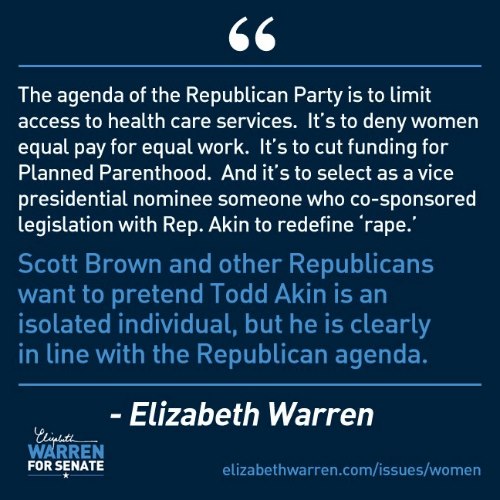
The world is now divided in two:
Countries that cover all of their citizens with health insurance. And those that don't.
Countries that make it unlawful to profit off of basic health insurance. And those that allow for health insurance corporations to profit off the sick.
Countries where health care is a human right. And those where it is not. Where if you can afford it, you get treated. And if you can't afford it, you may die.
Pay or die.
Most poor countries in the world are pay or die countries. Remarkably, so is the United States.
From Public Citizen.
The Problem
Republicans want to roll back the ACA, but they have not released a replacement plan. It appears they have no useful solutions for the problems that it addresses.
After decades of experience, privatized health care has been obscenely profitable, complex, bureaucratic, error prone, and expensive. It does not cover a large fraction of the people, and it is not the best in overall quality. The private market does not work well for healthcare for a lot of reasons. It is more expensive than any other country.
There are some things that are done well by the market, but health care is not one of them.
You can be ineligible on account of a pre-existing condition. You can be dropped for arbitrary reasons. Your coverage may be capped at an amount that makes insurance ineffective. In short, private insurance works well as long as you don't really need it.
However, insurance companies call the shots by spending large amounts on lobbyists, so Republicans like the system just the way it is.
Consider this note from the Economist:
"SIR – Michael Moore’s claim that Cuba has a better health-care system than the United States is not as “ridiculous” as you think (“Health screen”, January 10th). The United States was ranked 37th in the latest report on health care from the World Health Organization, whereas Cuba ranked 39th. I suspect there is little difference between being placed 37th and 39th. However, when productivity is factored in Cuba’s health-care system does indeed seem to be more effective than America’s. America spends 15% of GDP on health care (which works out at $6,700 per person in 2006 dollars) while Cuba spends 8% ($360 per person). Most businesses would consider themselves better than their competitors if they delivered an equivalent product or service at one-twentieth the cost. Kenneth McLeod, Chair, Department of bioengineering, Binghamton University" https://www.economist.com/opinion/displaystory.cfm?story_id=12970732
Number of people who go bankrupt every year because of medical bills:
— @DEMS VOTE WE WIN (@we_dems) September 2, 2019
UK - 0
France - 0
Spain - 0
Portugal- 0
Denmark - 0
Australia - 0
Iceland - 0
Italy - 0
Finland - 0
Ireland - 0
Germany - 0
Netherlands - 0
Sweden - 0
Japan - 0
Chile - 0
Canada - 0
United States - 643,000
If money is your most important 'value', you could argue that we cannot afford more inclusive healthcare. Then again, an unhealthy population is itself a heavy expense, and it is a drag on the economy. It is not a matter of money. It is a moral obligation. There is no excuse for the lack of a working, affordable, efficient system.
The worst features of the ACA are due to the Republican scheme
on which it is based. It rewards every major player except the public.
Not only is US healthcare expensive, it is corrupt.
Politicians use it for their own ATM and for jobs: examples
include Jeb
Bush, Bill
Frist, Billy Tauzin,
Rick
Scott and many others.
Insurance
companies seem to run the show. They have
thousands of employees to 'process' health insurance claims, many in
very expensive office buildings, and obscenely
paid CEOs. For all that expense, what do they contribute to the
actual delivery of health care ? Nothing. They have no business making
decisions that are rightfully made by doctors and their patients.
Although they do deny payment and exclude sick people (very crude
rationing) , they do nothing
to actually provide health care. (They pay plenty to lobby
politicians though, so they foil any real reform, and
continue to rip off sick people for profit.) Rating each individual for
health insurance requires a large bureacracy engaged in invasive, privacy-invading,
procedures.
So here's a suggestion for
health care reform. Retrain health insurance employees so that they
can actually do real work in doctors offices, hospitals, or other real
jobs in health delivery. Close down the health insurers. Free their
workers to help with the millions of newly covered.
Everyone agrees that health care reform is necessary. Our
outsized healthcare expenses are, alone, enough reason. There is
evidence that a single
payer plan would save billions, but it is not even discussed
because ours is a system thoroughly corrupted by big money.
Lobbyists freed pharma from having to negotiate prices, and stopped
consumers from filling prescriptions in unsafe places like
Canada.
Republican propaganda that privateis
always better than public is just an excuse for profiteering. At least
for health care, public would be much better than private.
It is an unfortunate fact that medical errors are a major problem. "Death by medicine is now the leading killer and cause of injury in this country, ahead of the prior champion killers, heart attacks and cancer." (Gerry Spence quote) That is why victims need a way to recover damages. 'Tort reform' can allow errors to go uncorrected and a way to be sure consumers do not get justice. Victims should have their day in court.
Because right-wing
ideologues are constantly assuring us that
the government can't do anything for us (Republicans
seem to want to prove it), there does not seem to be real
discussion of functions that are best done by the public
or private sector. Since I am covered by Medicare, it is
reassuring to know that I will not arbitrarily be dropped, that
pre-existing conditions will not exclude me.
I'd say the government mostly does an excellent job when it is
simply paying for health care. Republicans would killl it.
It is true that the US
has heavy expenses
that other countries do not. It has a military
that is larger than the rest of the world's combined, it is a world
leader in incarcerations, and, its
healthcare expenses are much more than other developed countries.
Although prospects for health reform are better than they have been in a long time, Republicans are throwing up serious obstructions. Money (paper) is more important to them than the public good, and besides they wouldn't want Democrats to get credit. Our own Senator Lieberman, often on the Republican page, killed a public health option. (His Contributions from health & insurance interests: $3,308,621.) Actually, A Public Option would save many Billions (9/1/2009)
A simple solution that works well in other countries, that
would make US business more competitive by removing the healthcare burden, and
level the global playing field would be a plan that would cover
everyone. Media has blacked
out this approach. Powerful interests: pharma,
insurance companies, and others can effectively block any efficient system.
It's a moral commitment. Everyone should be covered, and the cost should be covered by taxes. Wisely spent tax dollars would get a much better deal.
The U.S. has been cursed with self-serving leadership that
does not work in the public interest. Healthcare is but one example.

Slide Show: Enemies of Health Reform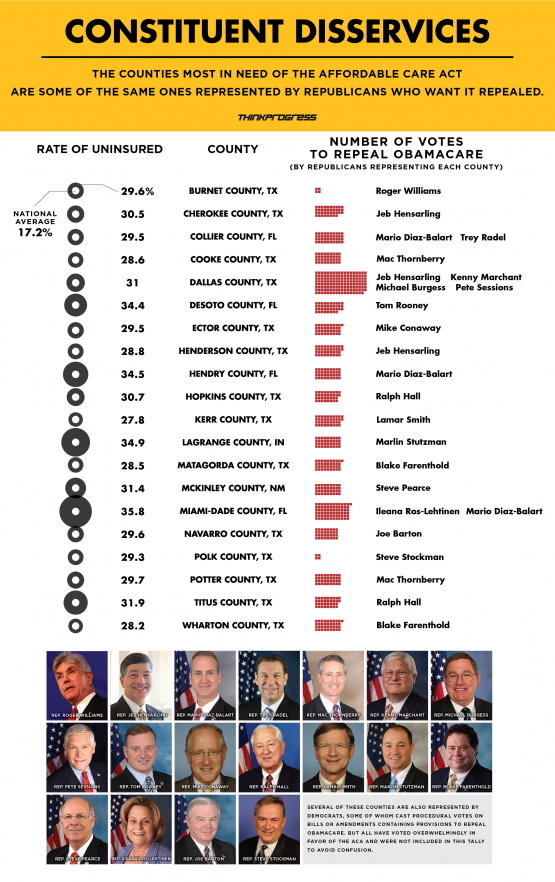
Health Care Policy The Nation spotlights the senators, amendments, activists and organizations most likely to derail healthcare reform efforts.
Health Care Reform: Just The Facts (3/22/2010)
Noam Chomsky on Healthcare and the Media (3/22/2010)
Congress: Fight for real Health Care Reform.
Senate bill as voted on 12-24-09 now online in pdf and Word formats:
Sign a Petition supporting single payer health care.
Capitalist Health Insurance For All (9/2009)
Is US Health Really the Best in the World ?
David Cutler on Healthcare reform (12/31/2009)
Evolution of the Health Care System in the United States
A simple plan for Health Care Reform
About Pharma
Examining the Medical System Overhaul
Tell Media: Include Single-Payer in Healthcare Debate (7/2/2009)
Could Media Derail Health Care Reform ? (1/7/2009)
Compare Medicare supplements in Connecticut
Health Care Connecticut On-Line
Why is it we have Finite Resources for Health Care, But Unlimited Money for War ?
Senator Sander's Comments (10/24/2009)
Mobilization for Health Care for All
What is Risk Adjustment ? (10/2009)
Insurance Industry Whistleblower Wendell Potter Blasts Senate Panel Rejection of Public Insurance Option
Insurance Companies are the Real Death Panels (9/20/2009)
Links
Physicians for a National Health Program
A Brief History: Universal Health Care Efforts in the US
GOP Healthcare Plan: Delay, Obstruct, Lie, Rinse, Repeat
Internal RNC Memo: 'Engage In Every Activity' To Slow Down Health Care Reform Huffington Post, July 21, 2009
VIDEO | Keith
Olberman: Legislators for Sale (8/3/2009)
Keith Olbermann, MSNBC Countdown: "Finally tonight, as promised, a
Special Comment on Health Care Reform in this country, and in particular,
the 'public insurance option.'"
Top
Ten Ways To Tell Your President & His Party Aren't Fighting For Health Care For Everybody
By Bruce A. Dixon, Black Agenda Report, July 29, 2009
Inside
Story on Town Hall Riots: Right-Wing Shock Troops Do Corporate America's Dirty Work
By Adele M. Stan, AlterNet, August 10, 2009.
My 1933
Nightmare By David Michael Green, Common Dreams, August 11, 2009
Single-Payer Frequently Asked Questions
The True Cost of Prescription Drugs
"Grassroots, single-payer activists successfully pushed the Democratic Party Platform Committee to propose 'guaranteed health care for all.' This is a huge improvement from their previous language that merely endorsed 'universal coverage,' which is often a euphemism for the right to purchase private health insurance. We know from past state experiments that this right is meaningless. As we're now seeing in Massachusetts, private coverage comes with such burdensome restrictions, co-payments and deductibles that patients still can't afford the care they need. We need to continue to push for non-profit, tax-funded national health insurance." Steffie Woolhandler, Professor of Medicine at Harvard University. (8/12/08)
BENJAMIN DAY, director@masscare.org, https://masscare.org executive director of Mass-Care, a health care advocacy coalition based in Boston, said: Its easy to build political consensus for expanded health coverage. But experience shows that you can't achieve universal coverage at an affordable price unless you throw out the insurance companies with their massive overhead and profit, and replace them with a more efficient single-payer national health insurance program. "Sen. Obama should learn this lesson," Day said. As for Sen. John McCain's health care proposals, "they are so obviously unworkable that its hard to take them seriously." (8/12/08)
Read this FREE online!



Here's an eye-opening letter to the editor of The Economist, Jan 22, 2009 issue:
"SIR – Michael Moore’s claim that Cuba has a better health-care system than the United States is not as “ridiculous” as you think (“Health screen”, January 10th). The United States was ranked 37th in the latest report on health care from the World Health Organization, whereas Cuba ranked 39th. I suspect there is little difference between being placed 37th and 39th. However, when productivity is factored in Cuba’s health-care system does indeed seem to be more effective than America’s. America spends 15% of GDP on health care (which works out at $6,700 per person in 2006 dollars) while Cuba spends 8% ($360 per person). Most businesses would consider themselves better than their competitors if they delivered an equivalent product or service at one-twentieth the cost. Kenneth McLeod, Chair, Department of bioengineering, Binghamton University" https://www.economist.com/opinion/displaystory.cfm?story_id=12970732
Insurance companies probably have many thousands of employees to 'process' health insurance claims, many in very expensive office buildings, and many obscenely paid CEOs. For all that expense, what do they contribute to the actual delivery of health care ? Nothing. They have no business making decisions that are rightfully made by doctors and their patients. They do nothing to actually provide health care. (They pay plenty to lobby politicians though, so they may manage to continue to rip off sick people for their personal profit.)
So here's a suggestion for health care reform. Retrain health insurance employees so that they can actually do real work in doctors offices, hospitals, or other real jobs in health delivery. Close down the health insurers. We could go to a single payer plan like most civilized, advanced countries. My understanding is that there is a bill, HR676 which would do that. That would simplify the system and save enough money to guarantee universal health care.
Republicans like Jeb Bush are enjoying the healthcare gravy train and they still have enough people to stop real reform. Money (paper) is more important to them than results, and besides they wouldn't want Democrats to get credit for any improvement.
About Single Payer Healthcare
Media Blackout on Single-Payer Healthcare (3/6/2009)
Take Action: Tell your representatives to support single-payer health care!
Jacob S. Hacker, PhD: Health Care for Americans
Keep Your Job, Lose Your Health Insurance (2/7/2009)
How Special Interests Could Double Health Costs and How We Can Stop It (1/28/2009)
Want to Shut Conservatives Out of Power for Good? Implement Universal Health Care (10/31/2008)
Guaranteed Health Care (6/24/2008)
US Infant Mortality has fallen (10/16/2008)
Healthcare: Debunking the Free Marketeers
"We know that our health-care system is broken: wildly expensive, terribly inefficient, and poorly adapted to an economy no longer built on lifetime employment, a system that exposes hardworking Americans to chronic insecurity and possible destitution. But year after year, ideology and political gamesmanship result in inaction, except for 2003, when we got a prescription drug bill that somehow managed to combine the worst aspects of the public and private sectors—price gouging and bureaucratic confusion, gaps in coverage and an eye-popping bill for taxpayers." Barack Obama: Audacity of Hope
Ask Congress not to cut Medicare (01/28/2008)
Health care is a right, not a commodity.
Six Reasons why health care is not a commodity
The Medicare Privatization Scam
About Prescription Drug Deaths
Collateral Damage: Bad Medicine in Tennesee (film trailer)
The White House severely edited congressional testimony given Tuesday by the director of the Centers for Disease Control and Prevention on the impact of climate change on health, removing specific scientific references to potential health risks, according to two sources familiar with the documents. (Oct.23,2007)
Paul Krugman| Health Economics 101
Paul Krugman writes that the free market doesn't work for health insurance, and never did. All we have ever had was a patchwork, semi-private system supported by large government subsidies.
https://www.truthout.org/article/paul-krugman-health-economics-101
Krugman's book "The Conscience of a Liberal" is particularly good on health care reform.
Confronting Health Insurance Companies
.
Why Does Everyone Bow Down to the Health Insurance Industry?
By Barbara EhrenreichBow your heads and raise the white flags. After facing down the Third Reich, the Japanese Empire, the U.S.S.R., Manuel Noriega and Saddam Hussein, the United States has met an enemy it dares not confront -- the American private health insurance industry.
With the courageous exception of Dennis Kucinich, the Democratic candidates all rolled out health "reform" plans that represent total, Chamberlain-like, appeasement. Edwards and Obama propose universal health insurance plans that would in no way ease the death grip of Aetna, Unicare, MetLife, and the rest of the evil-doers. Clinton -- why are we not surprised? -- has gone even further, borrowing the Republican idea of actually feeding the private insurers by making it mandatory to buy their product. Will I be arrested if I resist paying $10,000 a year for a private policy laden with killer co-pays and deductibles? (more)
U.S. health care is bad for your health
2007-06-03, San Francisco Chronicle (San Francisco's leading newspaper) https://sfgate.com/cgi-bin/article.cgi?f=/c/a/2007/06/03/EDGHQP1J6K1.DTL[A new] study ... finds that not only is the U.S. health care system the most expensive in the world (double that of the next most costly comparator country, Canada) but comes in dead last in almost any measure of performance. Although U.S. political leaders are fond of stating that we have the best health-care system in the world, they fail to acknowledge an important caveat: It is the best only for the very rich. For the rest of the population, its deficits far outweigh its advantages. [The] study compared the United States with Australia, Canada, Germany, New Zealand and the United Kingdom. Although the most notable way in which the United States differs from the other countries is in the absence of universal coverage, the United States is also last on dimensions of access, patient safety, efficiency and equity. The other five countries considered spend considerably less on health care, both per capita and as a percent of gross domestic product, than the United States. The United States spends $7,000 per person per year on health care, almost double that of Australia, Canada and Germany, each of which achieve better results on health status indicators than the United States. The United States also lags behind all industrialized nations in terms of health coverage. 46.6 million Americans (about 15.9 percent of the population) had no health insurance coverage during 2005. It is no wonder, then, that medical bills are overwhelmingly the most common reason for personal bankruptcy in the United States.
Note: For a treasure trove of reliable information on health, click here.
Death by medicine is now the leading killer and cause of injury in this country, ahead of the prior champion killers, heart attacks and cancer. The latest composite figures show death by improper medical conduct of hospitals and doctors (“iatrogenic deaths” they are called) at 783,936 dead each year, while deaths from heart disease is 699,697 and deaths from cancer, 553,251. The authors of this study report that “as few as 5 percent and only up to 20 per cent of iatrogenic acts are ever reported.” This implies that if medical errors were completely and accurately reported, we would have a much higher annual iatrogenic death rate. Dr. Leape, one of the first investigators of this issue, said his figure of 180,000 medical errors annually was equivalent to three jumbo jet crashes every two days. That was in 1994. The latest report shows that six Jumbo jets are falling out of the sky each and every day, killing all aboard...This same report says the number of unnecessary medical and surgical procedures performed annually is 7.5 million. The number of people exposed to unnecessary hospitalization annually is 8.9 million. Little wonder the medical profession seeks protection. 166 Gerry Spence: Bloodthirsty Bitches and Pious Pimps of Power
Jeb Bush Joins the Tenet Gravy Train
By Brett Arends 09 May 2007 Jeb Bush, the president's brother and former governor of Florida, is up for election Thursday as a director of troubled hospital chain Tenet Healthcare. Assuming he's waved through, his pay in his first year would come to nearly $37,000 a day. This is the same Tenet that had to pay $900 million to Uncle Sam last summer to settle charges that it had overbilled Medicare and Medicaid over many years. Nine hundred million dollars... It's also the same Tenet that just paid $80 million to the IRS after an audit found it owed back taxes going back as far as 1995... And this is just the big stuff. Tenet's recent public filings read like a police blotter. One of its clinics in South Carolina performed 436 open heart operations without certification. The company is being sued in California by staff claiming they were systematically short-changed on pay and overtime, in breach of the state's labor code. Three former Tenet staff members, at a New Orleans hospital it owned, are under investigation for allegedly euthanizing four patients following Hurricane Katrina (from CLG news)Remote Area Medical (See A Republican State's Health Plan)
Watch Michael Moore's film "Sicko" on-line for free.
Michael Moore on Keith Olberman (video)

US
Treasury Investigates Michael Moore For Taking Sick People To Cuba
QUICK
READ Share/Comment
Andy Grove's proposal for healthcare.
Physicians Proposal.
The United States spends more than twice as much on health care as the average of other developed nations, all of which boast universal coverage. Yet over 39 million Americans have no health insurance whatsoever, and most others are underinsured, in the sense that they lack adequate coverage for all contingencies (e.g., long-term care and prescription drug costs). See also the PNHP website.The Problem
The US is the only advanced country that does not have national health care.
That Americans do not have security of their health care coverage is a national disgrace. US health care is the most expensive in the world in % of Gross Domestic Product (GDP), but it does not cover a lot of us. Over 45 million people are not insured for health care in the US, although estimates, including underinsured or partially insured range up to one and a half times that amount, and the number is increasing.
Making health benefits an obligation of employers was a fatal flaw because it polarized business against it. Since it is more a public obligation in other countries, it makes globalization very unlevel. The auto and other industry are visibly suffering from this. They are responding by busting their unions and moving offshore.
Slowly, through increases in the employee contribution and copays the burden is being shifted away from companies. For some retirees they are pulling out . Insurance companies are in control. Many insurance companies sell their product based on the identification of low-risk pools, thus denying insurance to those most in need. You do not get insurance if you have a ‘pre-existing condition’. A health care system that does not cover sick people is an oxymoron.
Insurance companies have a close working alliance with Republicans. The MSA scheme, although derided as a kooky idea by most economists and health care experts, is now the ideological crown jewel of the Republican Medicare plan. The genius who came up with the ‘use it or lose it’ idea in which the money you set aside for healthcare at the end of the year becomes the employers. That’s Republican privatization for you…and like most of Bush policy is corporate welfare.
Because of press bias in health care reporting, the public is constantly misled from all sides. Media limits debate to private sector choices, denies voice to other points of view, and fails to provide coverage of experience in other countries. The Bush administration worked hard to suppress speech by further concentrating media.
Although there are variations, almost all Western countries fund health care with a single payer system. (There are always private options for people willing and able to pay for them.) Germany’s expenditures are half of ours per capita, and provide universal coverage.
Not only is our healthcare system dysfunctional, it is causing manufacturers, instead of improving product, to bust their unions and move offshore.
Republican tax cuts were taken from health care and it shows. Hospitals were sold (privatized) just to keep the doors open. Electing Republicans assures that the current flawed system will not only remain in place but also get worse. Instead you will get a 'Star Wars' program guaranteed (by Ted Postol of MIT) not to work.
To make the global free market a level playing field, healthcare should be largely taxpayer funded. The profit motive is out of place in medicine and only produces god awful results.
The following is a NYT oped by single-payer advocates Steffie Woolhandler and David Himmelstein. Please write letters of support. Talking points could include that USGP (Green Party) advocates a single-payer health plan for all. Letters should be no more than 150 words: letters@nytimes.com
December 15, 2007
I Am Not a Health Reform
Cambridge, Mass.
IN 1971, President Nixon sought to forestall single-payer national health insurance by proposing an alternative. He wanted to combine a mandate, which would require that employers cover their workers, with a Medicaid-like program for poor families, which all Americans would be able to join by paying sliding-scale premiums based on their income.
Nixon’s plan, though never passed, refuses to stay dead. Now Hillary Clinton, John Edwards and Barack Obama all propose Nixon-like reforms. Their plans resemble measures that were passed and then failed in several states over the past two decades.
In 1988, Massachusetts became the first state to pass a version of Nixon’s employer mandate — and it added an individual mandate for students and the self-employed, much as Mrs. Clinton and Mr. Edwards (but not Mr. Obama) would do today. Michael Dukakis, then the state’s governor, announced that “Massachusetts will be the first state in the country to enact universal health insurance.” But the mandate was never fully put into effect. In 1988, 494,000 people were uninsured in Massachusetts. The number had increased to 657,000 by 2006.
Oregon, in 1989, combined an employer mandate with an expansion of Medicaid and the rationing of expensive care. When the federal government granted the waivers needed to carry out the program, Gov. Barbara Roberts said, “Today our dreams of providing effective and affordable health care to all Oregonians have come true.” The number of uninsured Oregonians did not budge.
In 1992 and ’93, similar bills passed in Minnesota, Tennessee and Vermont. Minnesota’s plan called for universal coverage by July 1, 1997. Instead, by then the number of uninsured people in the state had increased by 88,000.
Tennessee’s Democratic governor, Ned McWherter, declared that “Tennessee will cover at least 95 percent of its citizens.” Yet the number of uninsured Tennesseans dipped for only two years before rising higher than ever.
Vermont’s plan, passed under Gov. Howard Dean, called for universal health care by 1995. But the number of uninsured people in the state has grown modestly since then.
The State of Washington’s 1993 law included the major planks of recent Nixon-like plans: an employer mandate, an individual mandate for the self-employed and expanded public coverage for the poor. Over the next six years, the number of uninsured people in the state rose about 35 percent, from 661,000 to 898,000.
As governor, Mitt Romney tweaked the Nixon formula in 2006 when he helped devise a second round of Massachusetts health care reform: employers in the state that do not offer health coverage face only paltry fines, but fines on uninsured individuals will escalate to about $2,000 in 2008. On signing the bill, Mr. Romney declared, “Every uninsured citizen in Massachusetts will soon have affordable health insurance.” Yet even under threat of fines, only 7 percent of the 244,000 uninsured people in the state who are required to buy unsubsidized coverage had signed up by Dec. 1. Few can afford the sky-high premiums.
Each of these reform efforts promised cost savings, but none included real cost controls. As the cost of health care soared, legislators backed off from enforcing the mandates or from financing new coverage for the poor. Just last month, Massachusetts projected that its costs for subsidized coverage may run $147 million over budget.
The “mandate model” for reform rests on impeccable political logic: avoid challenging insurance firms’ stranglehold on health care. But it is economic nonsense. The reliance on private insurers makes universal coverage unaffordable.
With the exception of Dennis Kucinich, the Democratic presidential hopefuls sidestep an inconvenient truth: only a single-payer system of national health care can save what we estimate is the $350 billion wasted annually on medical bureaucracy and redirect those funds to expanded coverage. Mrs. Clinton, Mr. Edwards and Mr. Obama tout cost savings through computerization and improved care management, but Congressional Budget Office studies have found no evidence for these claims.
In 1971, New Brunswick became the last Canadian province to institute that nation’s single-payer plan. Back then, the relative merits of single-payer versus Nixon’s mandate were debatable. Almost four decades later, the debate should be over. How sad that the leading Democrats are still kicking around Nixon’s discredited ideas for health reform.