Peace
Civil paths to peace have always been and still remain the basic way of successfully confronting violence and terrorism...As Buddha said more than 2,500 years ago, the solution to most problems lies ultimately in clearer understanding, and that demands intellectual engagement, and not merely prompt action.
Peace and Democratic Society Amartya Sen (editor) Open Book
Judge blocks Trump officials’ efforts to dismantle US Institute of Peace (5/19/2025)
Doge occupies US Institute of Peace headquarters after White House guts its board (3/17/2025)
10 steps to world peace
STOCKHOLM INTERNATIONAL PEACE RESEARCH INSTITUTE (SIPRI)
Global Movement for a Culture of Peace
Voices for Creative Non-Violence
Global Center on Cooperative Security
Global Network Against Weapons and Nuclear Power in Space
Perdana Global Peace Organization
Women's International League For Peace and Freedom
People's Decade For Nuclear Abolition
Violence has seeped into our culture and it permeates our lives in ways that have changed us as a people. We must address this predilection for violence because it has now become our solace of first, rather than last resort, and we are becoming a country where the military - not diplomacy - guides our foreign policy. From Barbara Lee's book Renegade for Peace and Justice. Pg 203
"For every thousand pages published on the causes of wars, there is less than one page directly on the causes of peace." Geoffrey Blainey
Democracy didn't come across on the Mayflower. Indeed not. Nor with the Niña nor Santa Maria. Certainly not. Democracy was here. It was in full flower. It was rampant. It was all over. All nations were free, and that includes the buffalo nation, that includes the fish nations and the nations of trees. They were all free. That's what was here. Not to say that people always got along. That's why we had great councils to keep the peace. And that's what the Haudenosauneeshone leadership is about. We are not actually chiefs. Chief is an English word. We are hoyaneh, which means the peacemakers. We keep the peace. That's what the leadership is about. That's our work, that's our job. To keep the peace and promote peace. I think people wonder about Native leaders and what we do. Some of the activities we're involved in carry us to many places in the world, and our leaders have always been on the move. Oren Lyons - the ice is melting.
And today, JFK's great concerns seem more relevant than ever: the dangers of nuclear proliferation, the notion that empire is inconsistent with a republic and that corporate domination of our democracy at home is the partner of imperial policies abroad. He understood the perils to our Constitution from a national-security state and mistrusted zealots and ideologues. He thought other nations ought to fight their own civil wars and choose their own governments and not ask the U.S. to do it for them. Yet the world he imagined and fought for has receded so far below the horizon that it's no longer even part of the permissible narrative inside the Beltway or in the mainstream press. Critics who endeavor to debate the survival of American democracy within the national-security state risk marginalization as crackpots and kooks. His greatest, most heroic aspirations for a peaceful, demilitarized foreign policy are the forbidden debates of the modern political era. RFK Jr in the December 5th, 2013 issue of Rolling Stone.
Sanders, Warren, Ocasio-Cortez, and Other Lawmakers Sign Pledge to End America's "Forever Wars" (3/5/2019)
What Does It Mean to Celebrate International Peace Day? (9/2/2018)
A World Designed by Playground Bullies (7/26/2018)
JFK Made a Forgotten Turn toward Peace before He Was Killed; We’ve Abandoned it Entirely (6/8/2018) H. Patricia Hynes
Trillions
Spent on Violence as World Continues Downwards Spiral Away From Peace (6/8/2016)
Senator Chris Murphy's Principles for a forward-looking foreign policy
(6/11/2015)
Demobilized
in the USA: Why There Is No Massive Antiwar Movement (2/3/2015)
Three Short Films About Peace (10/7/2014)
Malala's
message on Drones ignored by Corporate media
(10/15/2013)
The Gravest Threat To World Peace (1/6/2013)
Why
I Crossed the Line (6/29/2012)
Can
Revolutionary Pacifism Deliver Peace ? (11/5/11)
Well well well... yet another mark in the plus column for this so called "dictatorship" know as 🇨🇦 Canada. pic.twitter.com/pxtQQSM2im
— Childhood's End (@AdvanceHumanism) November 27, 2023
It is a sad commentary on the
US that US
peace groups are considered
subversive.
59 % of the Federal Budget goes to the military. but the Trump administration is increasing it, while dismantling the State Department. What you prepare for will surely come to pass.
Except for Kucinich, who was pretty much marginalized, none of the major Presidential candidates are so much for peace that they would cut the military budget. Instead we are building an empire, a new generation of H bombs, spending wildly on the incredibly stupid, provocative 'Star Wars' missile defense, and continuing to expand a military that exceeds in cost the rest of the world combined. Remember...what you prepare for will surely come to pass.
That is the 'character' that Republicans have brought to US government. (also torture, disappearances, assassinations, regime changes (including our own), massive military expenses, and the permanent war. The last time the Comprehensive Test Ban Treaty came before the Senate in 1999, all but two Republicans voted against it.
It is time we recognise that the international community should assume the burden of preventing pre-emptive war by nation states and of policing independent terrorist operations. Pre-emptive war, such as in Iraq, is a war crime.
Medieval religions that provoke war should lose their tax-exempt status. If they are terrorists their assets should be seized.
A
global security system. Alternative to war.
Report From Iron Mountain
Although there was considerable discussion whether this document was legitimate or a hoax, the question it poses is valid.
... what problems would occur if the United States entered a state of lasting peace ?...The heavily footnoted report concluded that peace was not in the interest of a stable society, that even if lasting peace "could be achieved, it would almost certainly not be in the best interests of society to achieve it." War was a part of the economy. Therefore, it was necessary to conceive a state of war for a stable economy. The government, the group theorized, would not exist without war, and nation states existed in order to wage war. War also served a vital function of diverting collective aggression. They recommended that bodies be created to emulate the economic functions of war. They also recommended "blood games" and that the government create alternative foes that would scare the people with reports of alien life-forms and out-of-control pollution. Another proposal was the reinstitution of slavery. (taken from Wikipeda's entry on the Report from Iron Mountain
Annual global military spending now stands at US $1,339 billion, according to the Stockholm International Peace Research Institute figures for 2007. This corresponds to 2.5% of world gross domestic product (GDP) and $202 per head of population worldwide. Of this total, the USA accounts for around 45%.

Center for Peace Studies Videos
Protesting
Power: War, Resistance and Law: Francis Boyle.
Rowman & Littlefield Publishers Inc., forthcoming:
Since the Reagan Administration’s
ascent to power in 1981, hundreds of thousands of Americans
citizens have engaged in various forms of non-violent civil
resistance activities in order to protest against distinct elements
of U.S. foreign affairs, defense, and counter-terrorism policies
that violate basic principles of international law, the United
States Constitution, and human rights. These citizen protests have
led to numerous arrests and prosecutions by federal, state, and
local governments around the country. For the past twenty-five
years, the author has given advice, counsel, and assistance to
individuals and groups who have engaged in non-violent civil
resistance to stop illegal, unconstitutional, and criminal behavior
by the U. S. government around the world. This book has been
written to be used by concerned citizens, activists, NGOs, civil
resisters, their supporters and their lawyers as well as by the
American peace movement in order to inform themselves on the best
legal and constitutional arguments in support of such civil
resistance activities. This book contains extensive materials
analyzing the illegality and unconstitutionality of the Trident II
nuclear weapons system deployed by the United States and the United
Kingdom; the Bush Sr. administration’s 1991 war against Iraq;
the Clinton administration’s 1994 invasion of Haiti; and the
Bush Jr. administration’s ongoing war against Iraq. It is the
only book in print to explain how to use international law, the
U.S. Constitution and the laws of war to defend civil resisters in
criminal cases.
"I must frankly confess that the foreign policy of the United States since the termination of hostilities has reminded me, some times irresistibly, of the attitude of Germany under Kaiser Wilhelm II, and I know that, independent of me, this analogy has most painfully occurred to others as well. It is characteristic of the military mentality that non-human factors (atom bombs, strategic bases, weapons of all sorts, the possession of raw materials, etc.) are held essential, while the human being, his desires and thoughts—in short, the psychological factors—are considered as unimportant and secondary. Herein lies a certain resemblance to Marxism, at least insofar as its theoretical side alone is kept in view. The individual is degraded to a mere instrument; he be comes “human materiel.” The normal ends of human aspiration vanish with such a viewpoint. Instead, the military mentality raises “naked power” as a goal in itself—one of the strangest illusions to which men can succumb.
In our time the military mentality is still more dangerous than formerly because the offensive weapons have become much more powerful than the defensive ones. Therefore it leads, by necessity, to preventive war. The general insecurity that goes hand in hand with this results in the sacrifice of the citizen’s civil rights to the supposed welfare of the state. Political witch-hunting, controls of all sorts (e.g., control of teaching and research, of the press, and so forth) appear inevitable, and for this reason do not encounter that popular resistance, which, were it not for the military mentality, would provide a protection. A reappraisal of all values gradually takes place insofar as everything that does not clearly serve the utopian ends is regarded and treated as inferior.
I see no other way out of prevailing conditions than a far-seeing, honest and courageous policy with the aim of establishing security on supranational foundations. Let us hope that men will be found, sufficient in number and moral force, to guide the nation on this path so long as a leading role is imposed on her by external circumstances. Then problems such as have been discussed here will cease to exist." (1947) Einstein on Politics, Rowe and Schulmann.
Why Can't We Talk about Peace in Public?
It has been a long time since there has been a serious discussion in the media about a path to peace. The US is unquestionably the leading possessor of WMDs (weapons of mass destruction). With the exception of North Korea, there are no credible state threats to the US, yet the military remains the largest in the world.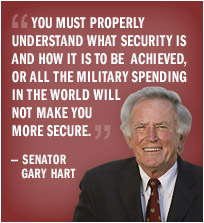 http://www.alternet.org/waroniraq/48601/
http://www.informationclearinghouse.info/article5637.htm
prop1.org
With an election looming, and always seeking to foster more
cooperation among activist groups, the Peace Team at http://www.peaceteam.net brings
you this message from CodePink, to join in signing their "Give Peace A
Vote" Pledge.
http://www.givepeaceavote.org
http://www.codepinkalert.org
Helen Caldicott (video part 1)
Message from Willie Nelson
I was at a concert this weekend in California to raise money for the National Veterans Foundation. I'm an Air Force veteran, and I have great respect for the military. I like to support the soldiers whenever I can. But I don't support this war in Iraq.
I was against the war before it started. I always thought it was a terrible decision, badly thought out, badly planned, and then horribly executed.
I want to see our troops come home right away, and so do most Americans. Unfortunately, too many politicians in both parties refuse to listen.
So when will the troops come home? When we won't put up with it anymore --- when we change our government. And how will we do that? By voting the bastards out! On November 7, you should vote for anyone who's against the war and vote against anyone who's for the war. It's that simple.
When I wrote the song "Whatever Happened to Peace on Earth" at Christmastime in 2003, a lot of people were for the war, a lot of people didn't know the facts or the truth. But people are waking up now. They're learning that they were lied to about the war. They're feeling lied to about this Mark Foley scandal in terms of who knew what and when. They're questioning the leadership in this country.
And that gives us new possibilities for November 7th. If we all go out and vote for peace candidates and get our friends to vote, and if our votes are really counted, it's no contest. There'll be a change in the Congress, and then we'll just have to keep building so we can get a president who won't send our soldiers to fight a war based on lies.
We should have thrown the bastards out years ago. Let's do it now! Please Give Peace A Vote and sign CODEPINK's petition by clicking on
http://www.givepeaceavote.org
http://www.codepinkalert.org
Willie Nelson
Please take action NOW, so we can win all victories that are supposed to be ours.
To be added to the list go to http://www.peaceteam.net/in.htm

Conference on Disarmament
CD Report
June 13, 2006
The CD Report is a weekly reporting service on the Conference on Disarmament, the sole international forum for negotiating disarmament treaties. It is produced by the Reaching Critical Will project of the Women’s International League for Peace and Freedom. This and other reporting services from RCW cannot continue without your financial support. If you find the CD Report useful, please consider making a donation today. Visit our website or contact the RCW Project Associate for more information on how you can support the Reaching Critical Will project.
The Conference on Disarmament (CD) continued its focused debate on Prevention of an Arms Race in Outer Space at its June 13 plenary session, with a focus on Transparency and Confidence Building Measures (TCBMs). Presumably responding to Russia's June 8 call to states with military space technology “to refrain from any practical activities aimed to place weapon systems in outer space while the international agreement on non-weaponization of outer space is being elaborated,” the United States openly declared its right to continue to develop such weapons in the session. Pakistan, Cuba, China, Belarus, Italy, Ireland, Brazil, France, Russia, United States, Argentina, Sweden and Australia also took the floor.
“Full Spectrum Dominance”
The United States sent a State Department official to the CD to make its most overt defense of its right to develop space weapons to date. ”The high value of space systems has led the United States to study the potential of space-related weapons to protect our satellites from potential future attacks, whether from the surface or from other spacecraft. As long as the potential for such attacks remains, our Government will continue to consider the possible role that space-related weapons may play in protecting out assets,” said Deputy Office Director of Multilateral Nuclear and Security Affairs Division of the Department of State John Mohanco.
Although it continues to support the negotiation of its top priority, a Fissile Materials Cut-off Treaty, the United States was “more convinced than ever that issues relating to the supposed weaponization of space definitely do NOT have consensus” in the CD.
Cuba noted that this lack of consensus may not be terribly strong, as only the United States and Israel voted against the resolution on PAROS adopted by the First Committee of the General Assembly (A/RES/60/54) in 2005. Although it usually abstains on this annual norm-building resolution, in 2005 the US led the first ever no votes on it against 180 states in favor. The United States was the sole no vote on the new resolution about transparency and confidence building measures in outer space (A/RES/60/66), against 178 states in favor.
The US stated that their opposition to any further arms control measures in outer space is because ”there is no – repeat, no- problem in outer space for arms control to solve.” They see the inability to define space weapons as the main barrier to discussing space weapons, although that did not prevent them from telling the conference they do not have nor plan to build such weapons.
Pakistan made a clear reference to the US Space Command's Vision for 2020 when Ambassador Khan stated, ”Military doctrines that seek full spectrum dominance projected through and from space are counterproductive and jeopardize the security of all humanity. Defense capability is legitimate but aspirations for impregnable defenses tend to undermine deterrence, and lead to new instruments of war and to arms race.”
Similar to US views on other weapons systems, “threats to the peaceful use of space... come not from the existence of military hardware, but from those who would disturb the peace”. The recently released Weapons of Mass Destruction Report, chaired by Hans Blix and written by weapons experts from around the world, insists weapons themselves are dangerous, in anyone's hands.
Transparency and Confidence Building Measures
The working paper submitted by China and the Russian Federation (CD/1678) on transparency and confidence building measures (TCBMs) was the basis for much of the discussion.
Several states noted the need for a step-by-step approach to transparency and confidence building. As Sweden stated, “an important step would be the full implementation of all existing CBMs (confidence building measures), for example those included in the 1975 Registration Convention.”
Russia said, ”by its nature, confidence building is a phased process.” China agreed that ”TCBMs (transparency and confidence building measures) can serve as a starting point and supplement for negotiation and concluding an international legal instrument that prohibits the weaponization of and an arms race in outer space.”
Belarus contended that ”new CBMs in outer space, in the first place, should be aimed at further strengthening of already existing international legal tools in the field of space law.”
Ambassador Valery Loschinin from Russia explained the working paper in detail. Measures to create confidence and serve as a starting point for a future treaty include: the exchange of information about space programs; demonstrations of technologies and launch sites; notifications of launches and descents from orbit of outer space objects; consultations on research and programs; and thematic workshops on outer space research and use issues.
An expert from the Swedish Defense Research Agency made comments and further suggestions to the measures presented in the Chinese/Russian working paper. “Mechanisms for consultations would serve many essential purposes, as pointed out in the working paper. One simple measure to facilitate such consultations would be the appointment of national points of contact,” said Mr. Lars Hostbeck.
Ireland promoted the suggestions made by the recently released report of the Weapons of Mass Destruction Commission: notice of all space launches; unilateral declarations by states of not flight-test or deploy weapons in space; declaration of moratoria on production and testing anti-satellite weapons; and establishing the observation of a minimum exclusion zone around satellites. Italy, Russia, Belarus and Cuba also urged states with extensive space capacities to officially declare they will not be the first ones to place weapons in outer space.
States also discussed the step-by-step approach for verification. Russia and China, which prioritize PAROS, admitted that verification was a complicated issue and might be postponed. China stated, ”Due to the complex nature of verification of outer space activities, which bears on the security interest of all countries, as well as to technical and financial constraints of verification, currently it is extremely difficult to negotiate a verification provision. For the time being, to put on hold the verification issue until conditions are ripe, and to negotiate a treaty without verification provisions could be a practical alternative.” Russia concurred, ”Elaborating the treaty without verification measures, which could be added at a later stage, might be a preferable option. TCBMs could, for a certain period of time, compensate for the lack of verification measures in the new treaty.”
Brazil, Argentina and Pakistan exemplified confidence building measures by sharing details of their own space programs in their statements.
Cooperation
As at the last plenary meeting, states emphasized the importance of cooperation with other UN bodies, which was echoed today. Belarus wanted work on confidence building measures to be carried out in cooperation between General Assembly’s First and Fourth Committee, Committee on the Peaceful Uses of Outer Space (COPUOS) and the CD. Sweden agreed that it is important to make sure the work among the CD, COPUOS and other relevant bodies will be mutually reinforcing and co-coordinated in order to avoid duplication or contradictory approaches.
”We believe that the dialogue between the various bodies with an interest in outer space should be enhanced” said Ambassador Carlo Trezza of Italy, and suggested inviting the Chairman of COPUOS to brief the CD on questions relevant to their work.
It would be useful if more states, particularly leaders, focused on cooperation rather than dominance. However, even with aggressive stances, there is still room for hope and some maneuvering among those working for compromise and progress in disarmament. The US indicated in its final paragraph that “delegations may continue to use this plenary to conduct in-depth reviews of all issues of interest to Member States, including outer space”.
The next plenary meeting will be held on Thursday 15 June.
-Jennifer
Nordstrom, Reaching Critical Will and
Beatrice Fihn, Disarmament Intern

Connecticut Peace Activists
- List of Peace Activists
- Al-Awda, The Palestine Right to Return Coalition
- American Friends Service Committee, CT
- Bradley Manning (Exposing War Crimes is not a crime.)
- CT Against Gun Violence
- CT Coalition for Peace and Justice
- CT Network to Abolish the Death Penalty
- CT United for Peace
- Friends of Animals
- National Institute for Animal Advocacy
- Peace Studies at UConn
- Promoting Enduring Peace
- United Nations Association-USA, CT
- Connecticut Peace Organizations
Non-Violent Activist (Magazine of the War Resister's League.)
Perdana Global Peace Organization
Women's International League for Peace and Freedom
Bibliography
The Hell of Good Intentions, America's Foreign Policy Elite and the Decline of U.S. Primacy by Stephen M. Walt
War on peace : the end of diplomacy and the decline of American influence. Ronan Farrow.
Doing Time For Peace: Rosalie G. Riegle
The Path to Zero: Dialogues on Nuclear Dangers: Richard Falk and David Kreiger
"Physicians to a Dying Planet‟: Helen Caldicott, Randall Forsberg, and the Anti-Nuclear Weapons Movement of the Early 1980s by Benjamin Redekop
With Enough Shovels: Robert Sheer
Disarmed and Dangerous: Murray Polner and Jim O'Grady