Labor
I think that what explains the vote for Trump or the vote for Marine Le Pen in France is primarily job losses in manufacturing due to trade competition, rather than an inflow of migrants. Thomas Piketty (NYT)
I was secretary of labor. Trump’s bizarre tariff scheme won’t revive American jobs Robert Reich (5/13/2025)
Trump is dismantling a key worker safety group. It’s another betrayal of the working class (5/6/2025)
Trump administration’s attempt to nix the labor rights of thousands of federal workers on ‘national security’ grounds furthers the GOP’s long-held anti-union agenda (4/28/2025)
Mass resignations at labor department threaten workers in US and overseas, warn staff – as more cuts loom (5/3/2025)
Trump will destroy the government agencies that most help working people (12/16/2024)
What does it actually mean when we talk about the American 'working class'? (12/3/2024)
Unions who think Republicans are warming to labor rights are getting played (7/23/2024)
How Donald Trump Worked to Destroy America's Labor Unions (6/18/2024)
Republicans Plan to wage Class Warfare on Working People (4/10/2024)
Beyond the 4-Day Workweek: Unveiling the Capitalist Roots of Worker Anomie and the Quest for Meaningful Labor (4/9/2024)
The U.S. is the only major country on Earth that does not guarantee workers a paid vacation.
— Bernie Sanders (@SenSanders) April 10, 2025
When a husband, wife & kids are unable to spend any time together on vacation, that is not a family value. It's an attack on everything a family is supposed to stand for.
Unacceptable. pic.twitter.com/MDZ7t8mJwh
Half of Trump's voters are maga nuts, the other half think Republicans care about working people when the minimum wage map makes it pretty clear it's Democrats that deliver for the working class.
— Rachel Bitecofer (@RachelBitecofer) November 17, 2024
It's STILL $7.25 in Red states!!! https://t.co/gCjQhgfmwM pic.twitter.com/3DMngBeGfZ
The whole U.S. private sector is passionate about destroying the union movement. This has been going on for a long time, but now they really think they can strangle it because it's the core of activism for almost anything. Take a look at, say, healthcare. In Canada, in the 50s, it was the unions who were pressing hard for national healthcare, and kind of interestingly, in the U.S. the same unions were pressing for healthcare for themselves, auto workers in Detroit. These are two pretty similar countries, but with this striking difference in outcomes on healthcare. Noam Chomsky
Freedom from trade unions and collective bargaining means the freedom to suppress wages. Freedom from regulation means the freedom to poison rivers, endanger workers, charge iniquitous rates of interest and design exotic financial instruments. Freedom from tax means freedom from the distribution of wealth that lifts people out of poverty." Neoliberalism – the ideology at the root of all our problems
"the real incomes of middle class families have grown twice as fast under Democrats as they have under Republicans, while the real incomes of working poor families have grown six times as fast under Democrats as they have under Republicans." Larry Bartels, Unequal Democracy, the Political Economy of the New Gilded Age
Workers are flexing collective power in major strikes, workplace actions and organizing drives, as they are forced to fight battles that labor won decades earlier: over workplace safety, an eight-hour day, vacation, sick leave, a living wage, health care and retirement security. But even as workers build power and wield it, we are thwarted by laws and judges who reliably side with corporations over workers. America's Judges Are Putting My Life on the Line (11/11/2021) NYT
It is difficult to overstate the hostility of the Roberts court to organized labor and the rights of American workers. Jamelle Bouie in the NYT (6/6/2023)
The world's workers have always been and still are the world's slaves. They have borne all the burdens of the race and built all the monuments along the tracks of civilization, they have conquered all things but their own freedom. They are still the subject class in every nation on earth and the chief function of every government is to keep them at the mercy of their masters.
Eugene V Debs, Presidential acceptance speech, Socialist Party Convention, May 1912.
Trader Joe's and Starbucks are helping Elon Musk undermine the US government (4/17/2024)
We must start preparing the US workforce for the effects of AI - now (2/29/2024)
Nikki Haley Is Proud Of Her 'Union-Buster' Record (12/9/2023)
Trump stabbed labor over and over. Now he says he supports striking auto workers? (9/25/2023)
Why this Labor Day is so consequential (9/4/2023) Bernie Sanders
Big business lobbies against heat protections for workers as US boils (7/31/2023)
Bernie Sanders Reintroduces PRO Act as Labor Activity Is on the Rise (2/28/2023)
'Unions benefit all of us': new Biden plan encourages federal workers to unionize (2/7/2022)
Identifying the policy levers generating wage suppression and wage inequality By Lawrence Mishel and Josh Bivens (5/13/2021)
It's not enough that they spend millions of dollars on union busting. They're trying to gut the agency most responsible for ensuring workers can exercise their right to organize on the job.
— Robert Reich (@RBReich) February 16, 2024
Nothing scares corporations more than working people recognizing their collective power. https://t.co/0LXTTJzDmr
Labor Network For Sustainability
Jobs created during U.S. presidential terms
Labor Blogs
National Employment Law Project
Institute for Global Labor and Human Rights
Don't forget: Two of the richest humans on planet earth have companies fighting in court to dismantle the gov't agency that holds corporations accountable for illegal union busting. pic.twitter.com/BLAl24SU20
— Robert Reich (@RBReich) September 2, 2024
Wow yet another blockbuster jobs report: 272,000 jobs added last month just crushing expectations and now 15,695,000 jobs created since 2021. Say it with me: #BidenBoom #DemocratsDeliver pic.twitter.com/gYAwCn0E5T
— Bill Pascrell, Jr. (@BillPascrell) June 7, 2024
The Trump administration was detrimental to workers' rights. Throughout Donald J. Trump's presidency, the Republican Party implemented measures that restricted workers' ability to protest and organize a union. Additionally, the GOP tried to revoke workers' access to healthcare. pic.twitter.com/w7qmHL1oGh
— Tony - Resistance (@TonyHussein4) March 29, 2023
Union busters were just dealt a major blow.
— Robert Reich (@RBReich) August 26, 2023
Yesterday the NLRB issued a ruling that will force employers to recognize unions in the workplace if bosses commit unfair labor practices during a union election.
Labor laws are violated in over 40% of all union election campaigns.
Many European countries spend 1 to 3 percent of their GDP to retrain their workers. America spends 0.24 percent. This failure to take care of American workers led to an inevitable populist backlash resulting ultimately in the election of Donald Trump.
Kishore Mahbubani's book Has China Won ? - see Public spending on labour markets [OECD]
Corporate America's playbook:
— Robert Reich (@RBReich) August 18, 2023
1) Exploit workers to maximize profits
2) Use profits to buy Congress
3) Use Congress to pass union-busting laws
4) Use union-busting laws to further exploit workers
5) Rinse and repeat
How we break this cycle? Build back a powerful labor movement.
Corporations like Amazon and Starbucks wouldn't be deploying huge union-busting campaigns if they weren't terrified of union power.
— Robert Reich (@RBReich) January 23, 2024
Every worker deserves the right to form a union free from interference.
We must pass the PRO Act to stop the union-busting and protect workers. https://t.co/MQqyxXadCq
The fruits of the toil of millions are boldly stolen to build up colossal fortunes for a few, unprecedented in the history of mankind; and the possessors of those, in turn, despite the Republic and endanger liberty. From the same prolific womb of governmental injustice we breed the two great classes - tramps and millionaires. PREAMBLE TO THE PLATFORM OF THE PEOPLE'S PARTY, 1892
LBJ said, "If you can convince the lowest white man he's better than the best colored man, he won't notice you're picking his pocket. Hell, give him somebody to look down on, and he'll empty his pockets for you."
— elly-bums #bantrophyhunting (@Ally_oopsy) November 9, 2022
Evangelicals aren't Christian, they're racist.
Bernie Sanders launches investigation into working conditions at Amazon (6/20/2023)
Working people who vote Republican are not voting in their own self interest.
By promising white supremacy, the GOP cons people into voting against their own self-interest.
Republicans are tireless in opposing unions, reducing wages, being sure the minimum wage is as low as possible, and otherwise avoiding any expense for benefits like healthcare, Social Security, pensions, vacations, family leave, sick time, worker protection from hazards such as pollutants, or covid. Without union organization, there is no good way to negotiate.
In Germany workers are required to be represented on corporate boards. Would that make a difference when corporations are deciding to move work off-shore ?
It is written in the Universal Declaration of Human Rights that everyone has the right to participate in a labor union. But Republicans in their continuing war on the people have made union busting national policy, and the result has been declining real wages for most, shrinking (plundered) pensions, benefits, and anemic social programs.
Workers have seemingly traded Republicans their lost wages, pensions, vacations, sick time, for white privilege, lower taxes for their boss, and a border wall to keep out immigrants, It is actually a Republican scam. They also get Fascism.
Machines can work, improve productivity, take drudgery out of highly routine jobs so that there is enough for everybody. Machines are poised to take a lot of jobs: drivers, cashiers, call center, warehouse, manufacturers, even many white-collar jobs, ...making many workers surplus. Either we put in good social support or the system collapses.
"The proposition that the worker who loses his job in one industry will necessarily be able to find employment, possibly after appropriate retraining, in some other industry, is as invalid as would be the assertion that horses who lost their jobs in transportation and agriculture could necessarily have been put to another economically productive use... It's whether you use the technology in a way that creates shared prosperity, of more concentration of wealth." (From Evil Geniuses, the Unmaking of America, Kurt Anderson.) When gains from productivity go to a few at the top wealth disparities soar, and most people are be left in poverty.
It might not be so important if the US had social programs comparable to other countries.
'It can be scary': how corporate America is hitting back against unions (1/31/2023) The Guardian
Thom Hartmann: Why The Rich FEAR Unions (8/19/2022)
Why Keeping Workers Poor Is actually Bad for Business (6/20/2022) Sam Pizzigati
We must fix our broken system of labor law (1/22/2022)
A four-day workweek is the future. Here's why: Congressman Mark Takano (8/24/2021)
Republicans Are Still Waging War on Workers (5/10/2021)
wage growth for the vast majority of U.S. workers decelerated radically in the post-1979 [Reagan] era. This near-stagnation of wages ... left a large excess available for the top 10% to grab, and most of it went to the top 1% and, especially, the top 0.1%. ... just the mirror image of wage suppression at the bottom. The forces that weighed on wage growth for the majority (excess unemployment, stagnation of the minimum wage, deunionization) largely do not slow wage growth for the top 1%; instead, they just allow more income (income, wages, and profits that are not going to typical workers' paychecks) to be claimed by the very top. In a sense, the wage suppression felt by the bottom 90% was zero-sum (or even negative sum), as their loss financed a sharp redistribution of wages and incomes to the very top. Identifying the policy levers generating wage suppression and wage inequality By Lawrence Mishel and Josh Bivens (5/13/2021)
"What the data shows, with regard to most issues, we do not need to speculate about the future, for we already know what the past has shown us namely, that it is Republican policies that have repeatedly, regularly, and with remarkable consistency brought us large increases in the rate and duration of unemployment, in the frequency, depth, and duration of recessions, and depressions, in socio-economic inequalities in wealth and income, and in rates of suicide, homicide, and (since the mid-1970's) imprisonment and capital punishments; and it is Democratic policies that have brought us equally large decreases in all of those destructive phenomena (even in imprisonment and capital punishment, as the contrast between the Red and Blue States shows.)" James Gilligan: Why Some Politicians are More Dangerous Than Others.
the Nordic economic model of growth-with-equity derives from the continued existence of a powerful labor movement (union density is above 70 per cent in each country versus 11.3 percent in the US and 17 percent in Great Britain). Viking Love: The Economist Gets It Wrong (2/8/2013)
It's a government-wide issue, it seems.
— Wide Mind | Fierce Heart (@wydmindfeersart) March 26, 2022
To my knowledge, not ONE of the structural changes that political scientists said was necessary to implement after Trump was out to protect our so-called democracy has been implemented.
The foundations are crumbling and the band plays on. https://t.co/sHSTJaj1nO
"Labor, as a commodity, is subject to virtually no regulation. In international commerce, labor is at the whim of capitalism in its most rudimentary form. The labor component of every product can be as cheap as the market wants it to be, and it can be provided under inhumane conditions and with complete disregard for all domestic standards from occupational hygiene to equal rights for women to prohibitions on child labor - and yet no one at the customs office is evenly remotely interested." The War For Wealth, the True Story of Globalization, or why the flat World is Broken: Gabor Steingart
"What survives of the middle class in the future will be a servant class. A class of motivators. A class of sycophants, whose jobs will depend not only on their skills, but on their ability to flatter and provide pleasure for elites." We, Robots: Staying Human in the Age of Big Data, by Curtis White
"The economist John Maynard Keynes once predicted that the four hour workday was close at hand and that technical improvements in manufacturing would allow ample time for people to focus on the " art of life itself"...Today the average citizen works longer hours for less money than he or she once did, putting in an extra four and a half weeks a year compared to 1979. Married couples with children are on the job an extra 413 hours, or an extra ten weeks a year combined. Adding salt to the wounds, the United States is the only industrialized nation where employers are not required by law to provide workers any paid vacation time." Astra Taylor: the People's Platform, Taking Back Power and Culture in the Digital Age.
The GOP is anti-stimulus checks, anti-unemployment benefits, anti-taxing the rich, anti-raising the wage and anti-union. And we're supposed to believe this is the party of the working class? pic.twitter.com/y6rPnIpK8k
(@AnIllicitWriter) May 16, 2021
Why Winning a Union Vote Has Become Nearly Impossible (4/15/2021)
Our Government Needs to Protect Workers, Not Corporations (12/23/2020)
The Post Covid World, The WEF's Diabolical Project: 'Resetting the Future of Work Agenda' ' After 'The Great Reset'. A Horrifying Future (11/11/2020)
50 reasons the Trump administration is bad for workers (9/16/2020)
Why the Working Class Votes Against Its Economic Interests
Leading the charge to give citizens - and workers - a real say (6/3/2020)
Franklin Roosevelt Put Young People Back to Work. Let's Do It Again. (5/18/2020)
What America Can Do to Fight Mass Unemployment (4/20/2020)
Futurist Sees 'The End of the World as We Know It for Average Person' (12/9/2019)
Working-age Americans dying at higher rates, especially in economically hard-hit states (11/26/2019)
The Autoworkers Strike Is Bigger Than G.M. (9/17/2019)
Reviving the American Working Class (8/29/2019)
Trump's War on Workers (8/11/2019)
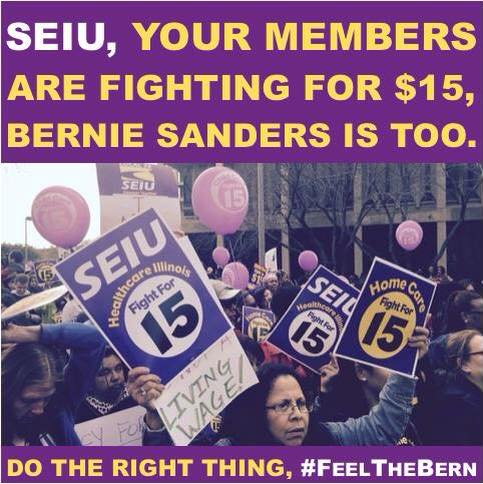
Koch-Funded Think Tanks Are Lobbying to Send Workers to Their Deaths https://t.co/0EwTN9WaAt via @truthout
— Ron Rabatsky (@ExposingALEC) April 28, 2020
"For a long, long time, Republicans have been selling you an economic agenda that goes like this: the way you and yours are going to get on the world, with a well paying job and good benefits and a secure, comfortable retirement and so on, is by eliminating government regulations, busting up your unions, and cutting taxes on your boss. Now, even if you don't believe all that, you've been voting for it." Jul 30, 2017
Nothing scares the billionaire class more than a strong union movement. We will fight for a union for every worker. Join us live in Hillsboro, New Hampshire: https://t.co/H0s2HZ3pLA
— Bernie Sanders (@BernieSanders) November 24, 2019
countries with high union density have low income inequality (Denmark, Finland, Sweden and Iceland) and the high inequality countries also have low union density (U.S., Chile, Mexico and Turkey). It's The Gap, Stupid: Archon Fung
Walmart CEOs salary last year: $23,618,233
— Ilhan Omar (@IlhanMN) October 29, 2019
A Walmart workers median pay last year: $21,952
The issue isnt that these employees arent working hard enough. Its that our system doesnt value workers. And its a moral outrage. https://t.co/Jg13KF8uFr
One of the reasons that the US has substandard social programs is that Republicans with their corporate allies have made union busting a high priority.
Unions annoy management when they bargain for higher wages,
their dues may go to Democrats, their higher wages make
them 'unfriendly to business', and they may insist on shorter hours,
overtime, safe working
conditions, vacation time, sick time, pension plans, family leave, and
other 'unreasonable' benefits. Employer based health
coverage was very bad policy.
To satisfy the oligarchy, health care, sick leave, vacation time, family time, long-term care, and other programs are at the bottom of budget priorities, and, unlike other developed countries, do little to mitigate insecurity for Americans. Fast track trade agreements have moved good paying manufacturing jobs offshore leaving behind crumbling factories and depressed US wages. Workers, having maxed out their credit cards, consumption is not likely to recover any time soon. The Grim Truth (4/8/2010)
Corporations can produce most of what we need, but only employ a small fraction of workers. There is always an unlimited amount of work that needs to be done, but corporations can do a lot with just a few people. Automation has enabled productivity increases, and shrunk the job market. Self-driving vehicles could change conditions for truck drivers, taxi drivers, and others. That's just the beginning.
There is seemingly
inexorable consolidation within every industry, so that market
choices become limited, work force is reduced. Fewer workers
with declining wages result in a weak domestic market.
Increasingly,third-world sweat shops, prison labor, or advanced technology
replace workers. Outsourcing to
poor countries is rampant. Overpopulation
has resulted in a global surplus of labor.
Advancing technology could produce shorter work weeks, and a better living standard for everyone, but productivity gains have trickled to the top resulting in immoral wealth inequality.
Despite what Republican
ideologues say, the economy, right now, is reaching extremes of unfairness.
Our government, for the corporations,
will continue that, especially if the GOP gets its way.
Capital can move freely, but labor cannot.
There's that "winning" we were promised.
— Frank the Bunny (@DeadBunnyFrank) December 3, 2019
On the upside, he's created many lucrative jobs for lawyers. https://t.co/AC6TA2r9nt
Employers stepping up efforts to Prevent Unions in the Workplace.
No Holds Barred-The Intensification of Employer Opposition to Organizing (5/20/2009)
Welcome to Gilead. https://t.co/WE2PPV4OHC
— Christian Salafia (@csalafia) August 14, 2019
Yes, America Is Rigged Against Workers (8/3/2019)
Here's Where the 2020 Candidates Stand on Labor (In These Times July 2019 issue)
Trump Nominates Antonin Scalia's Son as Labor Secretary (7/18/2019)
Don't let the Dow news distract you from the fact that labor relations are worse than they've been in half a century.
— Robert Reich (@RBReich) January 10, 2020
Even though the US economy is twice as large as it was in 1980, the median wage hasn't risen in 40 years.
Almost all the gains went to the top.
Small-town U.S.A. falls further behind urban America in job opportunities after recession (2/22/2019)
Here's Why America's Labor Force Is Still Struggling - While Corporate Profits are Going Gangbusters (8/29/2018)
Labor's Last Stand, Unions must either demand a place at the table or be part of the meal (9/2018) Harpers Magazine
Paychecks Lag as Profits Soar, and Prices Erode Wage Gains (7/13/2018)
In Brett Kavanaugh, workers have a justice who will always side with big business (7/11/2018)
Fresh Proof That Strong Unions Help Reduce Income Inequality (7/6/2018)
Supreme Court Labor Decision Wasn't Just a Loss for Unions (7/1/2018)
Supreme Court delivers blow to labor unions
Workers' wages fall after passage of GOP tax cuts (6/13/2018)
The Supreme Court Just Dealt a Blow to 25 Million Workers (5/22/2018) Thank Gorsuch.
It's not a coincidence that labor's share of national income has declined to its lowest level in seven decades.
— Ro Khanna (@RoKhanna) August 13, 2019
The key to fighting against inequality, stagnant wages, and mistreatment of workers lies in expanding access to unions. https://t.co/dEXuroBBTT
Behind Janus: Documents Reveal Decade-Long Plot to Kill Public-Sector Unions (2/22/2018))
Trump administration's proposed labor rule would rob tipped workers of $5.8 billion per year (1/18/2018)
Ten actions that hurt workers during Trump's first year (1/12/2018))
No one:
— Committee on Education & Labor (@EdLaborCmte) July 25, 2019
Trump advisor: the minimum wage should be $0. pic.twitter.com/okoRl4fxE8
In legal circles, the term private government is most commonly associated with Robert Lee Hale. "There is government," he wrote, "whenever one person or group can tell others what they must do and when those others have to obey or suffer a penalty." His 1952 book Freedom through Law called for "public control of private governing power." Hale's work was an inspiration for many regulatory initiatives aimed at taming the worst business practices. However, in the workplace, the US government's initiatives have been fitful and partial, always vulnerable to sudden reversals by bureaucrats or courts hostile to labor. Review of Private Government: How Employers Rule Our Lives (and Why We Don't Talk about It Elizabeth Anderson
The asymmetry in liberalization of capital and labor flows leads to a further inequity. With capital markets liberalized, countries have to fight to keep capital by lowering taxes on corporations. Because labor - especially unskilled labor is not as mobile, they don't have to fight as hard to keep it. Hence asymmetric liberalization leads to shifting the burden of taxes on to workers - leading to reduced progressivity in the tax system. The same thing happens in wage bargaining: workers are told that if they do not accept lower wages and reduced protection, the capital (with its jobs) will move overseas. Joseph Stiglitz. Making Globalization Work.
Let us be clear: In states where they have increased the minimum wage, paychecks are higher and the economy is booming. There is no excuse not to raise the federal minimum wage to $15 an hour and end starvation wages for 40 million Americans. https://t.co/UYwCD08jgj
— Bernie Sanders (@SenSanders) July 28, 2019
Republicans Despise the Working Class (12/14/2017)
Is Trump Really Pro-Worker? (9/2/2017)
No country on Earth fully safeguards labor rights (8/2/2017)
Worker Safety Takes A Beating During Trump's First 100 Days (5/3/2017)
Despite his rhetoric as the candidate who will help American workers, Trump's business practices and early glimpses into his strategic agenda indicate that he is moving toward policies that would deepen, rather than ease the harms of an unfettered global market place and further weaken labor law protections for American workers. ILRF
The genius of American politics has been to marginalize and isolate people. In fact, one of the main reasons behind the passionate effort to destroy unions is that they are on of the few mechanisms by which ordinary people can get together and compensate for the concentration of capital and power. That's why the United States has a very violent labor history, with repeated efforts to destroy unions anytime they make any progress." Noam Chomsky: Imperial Ambitions pg198
CEO-to-worker pay ratio:
— Robert Reich (@RBReich) April 7, 2021
Coca-Cola: 1,621-to-1
Levi Strauss: 661-to-1
McCormick & Co: 585-to-1
Carnival: 490-to-1
Tyson Foods: 294-to-1
Unisys: 313-to-1
Does anyone else see a problem with this picture?
Just about everywhere in the West except the United States, where there is no mandatory paid time off, workers not only get vacations but also short work weeks, government health care, large pensions, high minimum wages, subsidized childcare, and so forth. Why is the United States the exception?" Claude S Fischer, Boston Review
Americans are drastically overworked and underpaid compared to workers in other advanced countries, and our workers are trapped in a rigid pattern of inequality that has ended a historic claim to being the nation of upward mobility. Jefferson Cowie: The Future of Fair Labor
If you are wondering what happened to the American middle class over the past few decades, take a look at the CEO to Worker compensation ratio in
— Ro Khanna (@RoKhanna) August 22, 2019
1965 - 20:1
1978 - 30:1
1995 - 121:1
2018 - 278:1
Middle and working class Americans deserve a raise.
...then Reagan came along and basically informed the business world that you can do anything you like to break unions. You can violate the law, and in fact, illegal firing of organizers tripled in the Reagan years. Clinton came along and he added another way of destroying unions. It's called NAFTA [North American Free Trade Agreement]. He didn't bother saying it, but the business world knew they could violate labor laws to break strikes by threatening to transfer enterprises to Mexico. And the number of illegal actions like that shot up again. Noam Chomsky 12/13/2012
If Republicans regain a majority in Congress, they will introduce anti-worker legislation in order to crush rising worker power.
— More Perfect Union (@MorePerfectUS) November 7, 2022
The top of Republicans' priority list:
1) Right-to-work
2) Defang & defund the National Labor Relations Board https://t.co/8YfDmwYpFE
"The royalists of the economic order have conceded that political freedom was the business of the government, but they have maintained that economic slavery was nobody's business. They granted that the government could protect the citizen in his right to vote, but they denied that the government could do anything to protect the citizen in his right to work and his right to live." FDR Second Bill of Rights.
“Article 23 (1) Everyone has the right to work, to free choice of employment, to just and favourable conditions of work and to protection against unemployment. (2) Everyone, without any discrimination, has the right to equal pay for equal work. (3) Everyone who works has the right to just and favourable remuneration ensuring for himself and his family an existence worthy of human dignity, and supplemented, if necessary, by other means of social protection. (4) Everyone has the right to form and to join trade unions for the protection of his interests.” (Universal Declaration of Human Rights)
" a number of forecasts suggest good opportunities for future job creation in the information technology, industrial (i.e. robot engineers and technicians) and green sectors. In addition, the health sector is set to create the largest job openings, estimated at more than 4 million new jobs in the US from 2012 to 2022. This is not surprising given that many people in advanced countries are living for longer. This, together with a reduction in fertility rates, is changing the demographics in many advanced and some emerging nations" Citi GPS: Global Perspectives & Solutions January 2016 (pg 8)
What Workers Lost in Trumps First 100 Days (4/27/2017)
Trump's First 100 Days are Marred by an Aggressive Anti-Worker Agenda (4/27/2017)
Paul Krugman: Making the Rust Belt RuStier (1/27/2017)
Trump Taps Anti-Worker Fast-Food CEO for Labor Secretary (12/8/2016)
Appeal
to the Working Class? Don’t Bother, Says Krugman (11/27/2016)
America's Hidden Crime Wave: Employers Steal $20
Billion From American Workers Every Year (8/17/2016)
Attack
on unions shows why we need a new social contract governing work
(1/13/2016)
Sanders bills aim for 10 million clean energy jobs (12/8/2015)
Americans earn less than they did 40 years ago, despite two fold rise in productivity (9/29/2015)
Sweden tests the six hours work day, with impressive results (9/18/2015)
IMF
Thinks Unions Reduce Income Inequality (7/2015) PDF
Unions Are Essential for a strong middle class (5/11/2015)
Time to
Recover Productivity Gains Our Bosses Have Expropriated for Decades (4/16/2015)
Robert
Reich: In Our Horrifying Future, Very Few People Will Have Work or Make
Money (3/17/2015)
The Republican Ambush on Worker's Basic Rights: Elizabeth Warren (3/8/2015)
GOP's Blind Hate of Labor Union Members (3/2/2015)
Getting
Back to Full Employment: A Better Bargain for Working People
Inequality: Rebuilding the Middle Class Requires Reviving Strong Unions
The pay gap between CEOs and workers is much worse than you realize (9/25/2014)
UNDERWRITING
GOOD JOBS: HOW TO PLACE OVER 20 MILLION AMERICANS ON A PATHWAY TO THE
MIDDLE CLASS USING FEDERAL PURCHASING POWER (6/18/2014)
Cut Throat Capitalism: Welcome to the Gig Economy (5/27/2014)
11
GOP Excuses for Not Extending Unemployment Benefits (4/8/2014)
"We don't just have a jobs deficit we have a 'good jobs' deficit. Annette Bernardt
Just How Much Do Republicans Hate UNions ? (2/13/2014)
GOP
Denies Workers’ Right to Unionize (2/11/2014)
The
Unemployed Get Screwed Again (1/11/2014)
The Lousy Jobs Report and the Scourge of Inequality (1/11/2014)
The Case of the (still) Missing Jobs
One Sh*t Sandwich - Hold The Bread. Coming Right Up!
Bill
Maher on the Minimum Wage (10/25/2013)
Digital
Technology will kill jobs, Inflame social unrest says
gartner (10/8/2013)
How
To Become a Part-Time Worker Without Really Trying
(8/20/2013)
Yes,
Robots Are Coming for Our Jobs—Now What?
(4/8/2013)
Gop Rep inadvertantly makes the case for doubling the minimum wage (2/14/2013)
Is
John Boehner Labor Economist ? (2/14/2013)
GOP
Senate Leader Endorses National Union Busting Law
(2/6/2013)
The Jobs Report, and Why the recovery has stalled (2/1/2013)
New Report Reveals Why GOP Hates Unions: They Raise Wages, Boost Economy (5/25/2011)
Unemployed, underemployed or anxiously employed? Work for change at www.unitedprofessionals.org.
Unions are the only counterweight to Oligarchy: Krugman (2/21/2011)
Michigan's
Corporate Servitude Law (12/13/2012)
The
25 Hour Work Week (12/13/2012)
Jobs Not Austerity
Truth About Jobs (10/7/2012)
Disdain For Workers (9/30/2012)
GOP War on organized labor
NLRB Fight Shows How Far We've Fallen (12/20/2011)
The
Liquidation of Society versus the Global Labor Revival
(2/24/2011)
The
Wrong Target: Public Workers, Unions, Didn't Cause The Budget Crisis (10/2011)
March
in Protest Labor Day: Robert Reich (8/25/2011)
The
Day The Middle Class Died (8/11/2011)
GOP's
War on American Labor (6/25/2011)
Union-Busting is About Permanent Republican Majority, Not Balanced Budgets (3/14/2011)
Gar
Alperovitz on Democracy and the New Economy (Video 58
minutes)
"Government
Doesn't Create Jobs" (11/9/11)
Scary New Wage Data: David Kay Johnston (10/25/2010)
Can We Cut CEO Pay Down to Size ?
The Middle Class Game Is Up: We're Heading to a Slave Labor Planet
A
desert for jobs and no end in sight: While millions of workers are
struggling to get by on inadequate
unemployment benefits, millions more are cut off completely as
joblessness rises.
Jobs But Low Pay (8/26/2010)
Hourly Wages Are Dropping (7/13/2010)
Rustbelt Rage (5/4/2010)
The South Carolina You Won't See on CNN (Greg Palast)
The Need to Keep Labor Radio Alive (12/31/2009)
Can They Do That? How You Get Screwed at Work (1/11/2010)
See this Elizabeth Warren video (about an hour, though well spent): https://www.brasschecktv.com/page/642.html
Uneasy Terrain: The Impact of Capital Mobility on Workers, Wages, and Union Organizing
Finding work twice as hard as when recession began a year ago By Heidi Shierholz 02-10-09
Fox News Morons Call American Unions and Workers ‘Fascist Parasites’ (7/6/2014) (VIdeo)
Fox hosts make it clear they are simply against unions. When they insist that union bosses - not employers - are intimidating workers, or when they declare that unions that drive up wages and benefits are harmful for Big Business, it's clear whose side they're on - and it's not the American worker's.
O'Reilly latest to advance UAW pay falsehood (2/25/2009)
See other notes on Fox News
US policy of Union Busting
The US is a signer of the UN declaration of Human Rights that asserts that everyone has the right to join a union. It just doesn't practice what it preaches. (See International Law.)
In 1981 Ronald Reagan made an assault in the Republican war on labor. "Reagan gave dedicated union foes direct control of the federal agencies that were designed originally to protect and further the rights and interests of workers and their unions." Not surprisingly, this is when the middle class went into decline.
Continuing in the path set by his role-model Reagan, Bush was virulently anti-labor. He made vigorous attempts to 'reform' Social Security (remember when a Republican says reform...he means shrink), looks the other way while Corporations bust unions and outsource, and otherwise promote regressive policies.
Automobile companies have bought out their union workers, even while sending small car production to Asia.
Walmart, when faced with a successful union drive in Canada, simply closed the store. It has no shame in sending its employees onto public services when they need health care or other assistance. (About Walmart)
Immigration enforcement is a technique for union busting. See this also.
(Copied shamelessly from David McCluskey's page dated December 31, 2007)
A new study recently released by John Logan, a lecturer at the London School of Economics, points out that the intensity of employer opposition and government hostility to collective bargaining in the United States is unique among developed nations.
This “repressive character of U.S. labor law, which allows free rein to anti-union employers,” not only hurts workers in the United States and in other nations, Logan said today.
There is growing evidence that consultants, employer groups
and multinational corporations are exporting U.S.-originated anti-union
strategies to other developed countries such as the United Kingdom
and Ireland and to transforming countries such as China. They dodge taxes that way too.
Strengthening the right to organize and bargain collectively through the Employee Free Choice Act would benefit not only American workers, but also workers in other nations.
Logan’s report, Unions Facing Hard Times: The Global Crisis in Union Collective Bargaining, shows that Sweden has the highest rate of union membership with 80 percent, while the United States trails at the bottom with 12 percent. Click here to download a copy of the report (PDF).
Department of Labor
There is no free market for labor.
Unions Facing Hard Times: The Global Crisis in Union Collective Bargaining
Wal-Mart's Violation of US Workers’ Right to Freedom of Association
Osha Takes a vacation
The NYT reports on OSHA's look the other way approach to workplace safety.
Walmart Denies Workers Basic Rights
Feb. 21: The Attack on the Employee Free Choice Act
If U.S. workers could earn higher wages, benefits, and better working conditions, who would be against them?
A powerful network of anti-union employers, conservative business associations, industry lobbying groups, and right-wing policy centers and policymakers seeks to shut down choice in the American workplace. Get up-to-speed about the opponents of the Employee Free Choice Act by checking out our new backgrounder.
The American Worker Is Doomed
https://www.truthout.org/issues_06/031907LB.shtml
Capitol Hill Holds Hearing on Black Male Unemployment
The black male unemployment rate is unacceptably high and it is time for the federal government to do something about it. That was the conclusion of a March 5 hearing held by the Joint Economic Committee, a bicameral, bipartisan committee of US representatives and senators who are charged with studying the nation's economy and making recommendations to the government for changes, if necessary.
https://www.truthout.org/issues_06/031907LA.shtml
Benefits
"The owner of the means of production is in a position to purchase the labor power of the worker. By using the means of production, the worker produces new goods which become the property of the capitalist. The essential point about this process is the relation between what the worker produces and what he is paid, both measured in terms of real value. Insofar as the labor contract is “free,” what the worker receives is determined not by the real value of the goods he produces, but by his minimum needs and by the capitalists’ requirements for labor power in relation to the number of workers competing for jobs. It is important to understand that even in theory the payment of the worker is not determined by the value of his product.
Private capital tends to become concentrated in few hands, partly because of competition among the capitalists, and partly because technological development and the increasing division of labor encourage the formation of larger units of production at the expense of the smaller ones. The result of these developments is an oligarchy of private capital the enormous power of which cannot be effectively checked even by a democratically organized political society. This is true since the members of legislative bodies are selected by political parties, largely financed or otherwise influenced by private capitalists who, for all practical purposes, separate the electorate from the legislature. The consequence is that the representatives of the people do not in fact sufficiently protect the interests of the underprivileged sections of the population. Moreover, under existing conditions, private capitalists inevitably control, directly or indirectly, the main sources of information (press, radio, education). It is thus extremely difficult, and indeed in most cases quite impossible, for the individual citizen to come to objective conclusions and to make intelligent use of his political rights." Einstein on Politics, Rowe and Schulmann. Monthly Review, May 1949
Links
- Kate Bronfenbrenner : Publications
- Jobs With Justice
- Employee Free Choice Act
- Change To Win
- contemporaryfamilies.org
- www.workinglife.org: A blog discussing the current state of the world of work
- Charles Kernaghan (fighting sweatshops)
- American Rights at Work
- Global Exchange
- Fight Back America
- Talking Union
- Disney: working for the rat in Haiti
- Child Slave Labor News links
- Worker Rights Consortium
- economicdemocracy.org
- United Farm Workers of America
- Kate Bronfenbrenner
- Labor Watch
- Institute For Global Labour And Human Rights
- working for us
- SEIU
- Labor's untold story
- National Committee to Preserve Social Security and Medicare
- americanrightsatwork.org
- Harvard Trade Union Program Home page (HTUP)
- Workers Rights Network
Video
GOP Candidates Spar, but Agree on One Thing: Don't Raise the Minimum Wage
Bibliography
The Hammer: Power, Inequality, and the Struggle for the Soul of Labor By Hamilton Nolan
Public spending on labour markets [OECD]
Evil Geniuses, the Unmaking of America, Kurt Anderson
Sold Out: How High-Tech Billionaires & Bipartisan Beltway Crapweasels Are Screwing America's Best & Brightest Workers by Michelle Malkin and John Miano (2015)
NO HOLDS BARRED The Intensification of Employer Opposition to Organizing BY KATE BRONFENBRENNER DIRECTOR OF LABOR EDUCATION RESEARCH CORNELL SCHOOL OF INDUSTRIAL AND LABOR RELATIONS
Sleeping
Giant, How the New Working Class will Transform America: Tamara Draut
The Future of Work, How the New Order of Business Will Shape Your Organization, Your Management Style, and Your Life by Thomas W. Malone (Harvard Business School Press, 2004)
Failure to Adjust: How Americans Got Left Behind in the Global Economy: Edward Alden
Factory Man: Beth Macy
The Fight For Fifteen: David Rolf
People
Get Ready: The Fight Against a Jobless Economy and a Citizenless Democracy: Robert W McChesney & John Nichols
Restoring the American Dream: Thomas A. Kochan
Rise
of the Robots, Technology and the Threat of a Jobless Future: Martin Ford
Labor's
Love Lost: Andrew Cherlin
Race
against the Machine: Erik Brynjolfsson & Andrew McAfee
Work's
New Age: The End of Full Employment and What It Means to You: James B. Huntington
The Servant Economy: Jeff Faux
The Great Risk Shift, Jacob S. Hacker
(Not)
Keeping Up with Our Parents, The Decline of the Professional Middle Class: Nan Mooney
Which Side Are You On? Thomas Geoghegan - Union elections are rigged too, and this excellent book describes why the Labor Department is part of the problem.
Nickel and Dimed: Surviving in Low-Wage America, Barbara Ehrenreich Throughout her three decades of journalism and activism, Ehrenreich has been one of the most consistent chroniclers of class in America. Listen/Watch/Read
The Big Squeeze: Steven Greenhouse
The Disposable American: Louis Uchitelle
Working Scared (or Not at All): Carl Van Horn
Pinched: Don Peck
The Future of Work: Richard Donkin
The Overworked American: Juliet Schor
The Overspent American: Juliet Schor
Inequality Matters (Even If You Don't Work At Wal-Mart), Daniel Brooke
The Trap: Selling out to stay afloat in Winner-Take-All America: Daniel Brook